
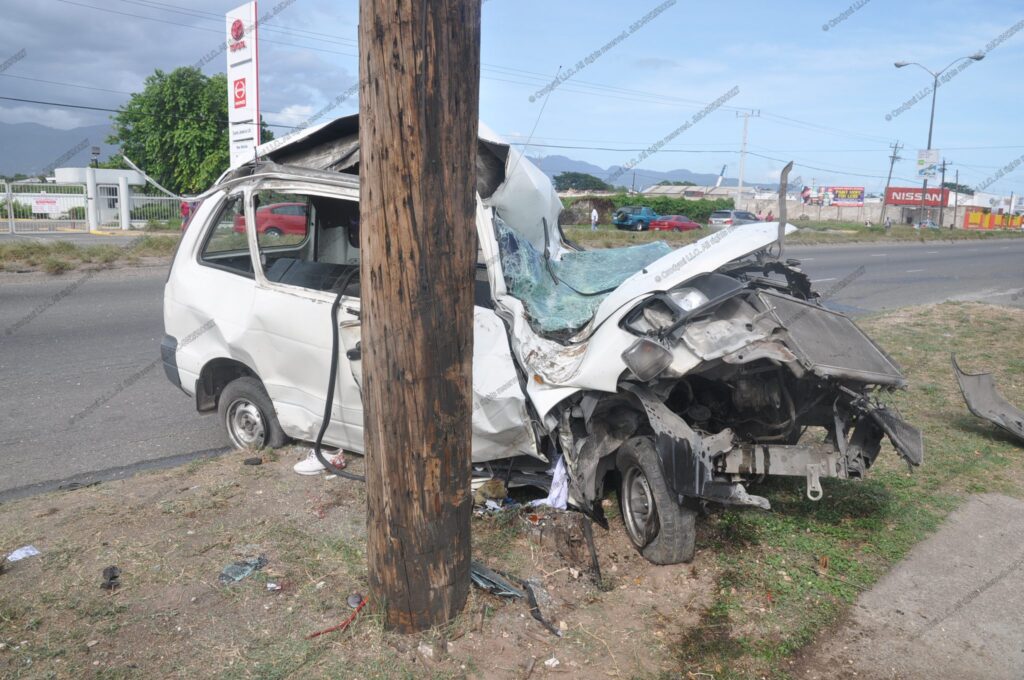
A practical guide to sudden unintended acceleration (SUA), sudden acceleration incidents (SAI), uncommanded full-throttle acceleration, electronic throttle control malfunction, stuck gas pedal claims, freeze-frame evidence, fault codes, EDR data, and the forensic inspection steps that help separate a true vehicle defect from driver error.
Top Section: Common Causes of Sudden Unintended Acceleration
Many people describe the event in plain language: “the car took off on its own,” “the vehicle surged forward while braking,” “the engine revved out of control in drive,” or “the gas pedal got stuck and caused the accident.” In forensic work, those descriptions are only the beginning. A defensible investigation looks at both vehicle-based defects and pedal misapplication / human factors.
A. Mechanical pedal interference or failure to return
Floor mat entrapment, stacked mats, sticky pedals, pedal wear, weak return springs, contamination, corrosion, trim interference, and assembly defects can prevent the accelerator from returning fully to idle.
B. Cable, linkage, throttle-body, or cruise-cable defects
On cable-throttle systems, a binding accelerator cable, damaged routing, throttle linkage issues, or cruise-control cable problems can hold engine speed above idle. On electronic systems, the throttle plate itself may bind.
C. APPS defects
A faulty accelerator pedal position sensor (APPS) can over-report pedal demand because of opens, shorts, intermittent faults, shaft slip, reference voltage errors, connector corrosion, loose terminals, EMI, or vibration-related damage.
D. TPS, throttle actuator, or throttle-motor faults
Throttle position sensors, throttle actuator motors, command circuits, and internal feedback paths can fail or go intermittent, creating incorrect throttle response, delayed return, or mismatched commanded-versus-actual throttle behavior.
E. ECM / PCM hardware defects
Bad solder joints, damaged boards, internal shorts, heat stress, unstable power supply, or faulty signal processing can corrupt throttle, idle, brake, or pedal interpretation at the module level.
F. Software or control-logic defects
Programming errors, calibration mistakes, or brake-throttle-override logic failures can produce incorrect torque control, poor throttle reduction, or logic states that do not match real driver intent.
G. Brake pedal sensor or BTO path defects
A vehicle may fail to protect the driver properly if the brake pedal signal is delayed, missing, implausible, or corrupted by wiring, switch, network, or module faults.
H. Wiring, harness, connector, and network defects
Chafed harnesses, shorts to voltage or ground, fretting, corrosion, poor grounds, pin drag, open circuits, and CAN / J1939 communication faults can mimic or trigger throttle-related abnormalities.
I. Aftermarket devices and modified wiring
Remote starts, pedal boxes, anti-theft hardware, telematics splices, power taps, tuning devices, and poorly integrated aftermarket electronics can interfere with accelerator, brake, or throttle signals.
J. Rare internal metallurgy or sensor failures
Rare internal faults can occur inside sensor assemblies. These cases are less common, but they matter when a claim becomes a product-defect or high-stakes litigation matter.
K. Diesel and heavy-vehicle fuel-control path faults
In diesel and heavy vehicle cases, the issue may involve fuel-rate logic, fuel rail pressure sensor paths, APPS circuits, or powertrain control strategy rather than a traditional throttle plate alone.
Rule out driver error without guessing
A sound investigation also examines pedal geometry, footwear, seat position, pedal spacing, and whether the driver may have believed the brake was pressed when the accelerator was actually applied.
Middle Section: What to Inspect, Which Fault Codes to Pull, and What Freeze-Frame May Reveal
When someone says the vehicle accelerated on its own, the first mistake is jumping straight to a conclusion. Preserve the evidence first, then inspect the system in a sequence that separates mechanical failure, electrical faults, software logic, and driver-input issues.
Where to inspect the vehicle
Fault code examples commonly investigated in unintended acceleration cases
The exact code set varies by manufacturer, scan tool, software version, and whether you have generic OBD-II access or OEM-enhanced access. These examples are useful starting points to investigate; always verify with OEM service information and module-specific definitions.
| Code / Family | Common Diagnostic Meaning | Why It Matters in an Unintended Acceleration Investigation |
|---|---|---|
| P0120–P0124 | Throttle / pedal position sensor circuit faults, range/performance, low/high input | Can point to unstable or implausible driver-demand or throttle-position readings. |
| P0220–P0229 | Secondary throttle / pedal sensor circuit faults or plausibility issues | Important where redundant channels disagree or a sensor over-reports pedal demand. |
| P2100–P2108 | Throttle actuator control motor, circuit, or forced-limited-power issues | May indicate actuator command, motor, or control-path faults. |
| P2111 / P2112 | Throttle actuator system stuck open / stuck closed | Highly relevant when a vehicle is alleged to have surged, held RPM, or failed to return to idle. |
| P2135 | Throttle / pedal position sensor voltage correlation problem | Often investigated when channels disagree and the ECM sees implausible throttle demand. |
| P0504 | Brake switch A/B correlation | Can matter when brake-throttle-override behavior is questioned or the driver says braking was applied. |
| U0100 / U0121 / Uxxxx | Communication loss with PCM, ABS, or related network modules | Network faults can affect throttle, brake, cruise, stability, or plausibility logic. |
| P0190–P0193 | Fuel rail pressure sensor circuit / range faults | Especially relevant in diesel or heavy-vehicle cases involving fuel-control path concerns. |
| OEM enhanced ETC / APP / TAC codes | Manufacturer-specific electronic throttle, accelerator pedal, or torque management faults | Often more informative than generic OBD-II when reconstructing a complex acceleration complaint. |
Freeze-frame and enhanced data points worth preserving
Driver-demand evidence
Accelerator pedal percentage, throttle position, brake switch status, cruise state, gear position, and steering input if supported.
Engine and speed evidence
Vehicle speed, engine RPM, load, manifold pressure, fuel rail pressure, and torque-related parameters where available.
Context evidence
Battery voltage, coolant temperature, ignition cycle count, timestamp context, and whether the data was captured during a confirmed fault.
Get started
Start the process today — no upfront payment required. We’ll provide the service now, and you can settle the payment later.
Tell us what you need
Get updates & continue
Drop your email so we can follow up. You can skip if you prefer.
Lower Section: What EDR Data Can Show in an Unintended Acceleration Case — and Why Crodymi Is the Solution
In many cases, the black box is one of the strongest objective sources available. Event Data Recorder (EDR) evidence does not replace a full inspection, but it can sharply narrow the dispute by showing what the vehicle recorded in the seconds leading up to the event.
What EDR data may show
Depending on the make, model, year, module, and retrievable event, EDR data may show pre-crash vehicle speed, throttle input, brake application or brake-switch status, engine RPM, seatbelt use, steering-related information, airbag deployment timing, delta-V, ignition cycles, and other event-related metrics. In a sudden unintended acceleration case, that can be crucial.
How Crodymi helps
Crodymi helps clients turn confusing acceleration claims into a structured forensic workflow. That may include:
Recommended practical inspection order
1. Preserve before touching
Photograph the footwell, pedal path, floor mats, and wiring before anything is moved or removed.
2. Check recalls, TSBs, and prior repairs
Look for known safety issues, repair history, aftermarket equipment, and module or wiring modifications.
3. Perform a no-power mechanical inspection
Check pedal return, linkage, throttle body, cable drag, and any mechanical interference first.
4. Then move to powered diagnostics
Pull DTCs, freeze-frame, live data, plausibility checks, and compare commanded versus actual throttle behavior.
5. Evaluate the wiring and network
Inspect reference voltages, grounds, connectors, network integrity, and any evidence of aftermarket splicing.
6. Escalate to module/software analysis when justified
Only after the basics are documented should you move into software, module, and advanced product-defect issues.
FAQ: Unintended Acceleration, Fault Codes, EDR Data, and Crash Reconstruction
These FAQ questions were put together to help address the kinds of concerns people often have after a vehicle seems to accelerate unexpectedly. Whether you drive a Ford, Chevrolet, Hyundai, Kia, Nissan, Mazda, Toyota, Tesla, Honda, GMC, or another make, these situations can happen occasionally and should be looked at carefully. Whether you are a lawyer, insurer, private investigator, or an individual trying to understand what happened, Crodymi is here to assist. This FAQ summarizes common issues, questions, and concerns that motorists like you may face when looking for answers after a suspected unintended acceleration event.
1. What is sudden unintended acceleration?
Sudden unintended acceleration is a situation where a vehicle increases speed in a way the driver says was not intended or commanded. It may involve mechanical defects, electrical faults, software logic, wiring issues, aftermarket interference, pedal misapplication, or a combination of factors.
2. Can a car really take off on its own?
Some drivers describe events that way. A real investigation must determine whether the cause was a vehicle defect, a sensor or throttle problem, a stuck pedal, network or software issues, driver input confusion, or another scenario entirely.
3. What is the difference between SUA and SAI?
SUA means sudden unintended acceleration. SAI means sudden acceleration incident. Both phrases are commonly used in safety, engineering, and legal discussions to describe an alleged uncommanded acceleration event.
4. Can electronic throttle control malfunction cause a crash?
It can be part of the inquiry. Electronic throttle control systems rely on sensors, wiring, actuator logic, module hardware, and software calibration. If one of those layers fails, throttle response can become inaccurate, delayed, implausible, or unsafe.
5. What fault codes matter most in an unintended acceleration case?
There is no single magic code. Investigators often review throttle actuator, accelerator pedal position, throttle position, brake switch correlation, network communication, and diesel fuel-control related codes. Code context matters more than code presence alone.
6. Can freeze-frame data help prove what happened?
Yes. Freeze-frame can help show what the module recorded around the moment a fault set, including throttle angle, pedal position, speed, RPM, brake status, voltage, and other supporting context. It is especially useful when paired with physical inspection findings.
7. What can EDR data show in a runaway car crash claim?
Depending on the vehicle and retrievable event, EDR data may show pre-crash speed, throttle input, brake application or brake switch state, RPM, seat belt use, delta-V, and other event-related factors that can support or contradict a sudden acceleration narrative.
8. Does a brake-throttle-override system always prevent unintended acceleration?
Not always. If brake input is not detected properly, if the logic is compromised, or if the issue falls outside the expected control path, the protection may not behave as expected. That is why brake switch and plausibility evidence are so important.
9. What should be photographed before the vehicle is touched?
Photograph the footwell, floor mats, pedal path, trim, debris, wiring, pedal position, witness marks, and any obvious interference or aftermarket hardware. Early photos can preserve critical evidence that disappears once the vehicle is moved or cleaned.
10. Can aftermarket devices contribute to unintended acceleration?
Yes. Remote start systems, pedal boxes, telematics splices, tuning devices, anti-theft hardware, dash-cam power taps, and other aftermarket modifications can affect signal integrity, power stability, or communication paths if poorly integrated.
11. Is driver error always the answer?
No. Driver error should be evaluated carefully, but not assumed. A defensible investigation tests the vehicle, checks the evidence, reviews available data, and considers both human and machine factors without bias.
12. How do I report unintended acceleration to NHTSA?
You can submit a vehicle safety complaint through NHTSA’s official “Report a Safety Problem” page. It is also wise to preserve the vehicle, gather photographs, keep repair records, and document exactly what happened before the vehicle is altered.
13. How do I check whether my make and model has an unintended acceleration recall?
Use NHTSA’s official recall lookup by VIN or by year, make, and model. Open recalls, investigations, complaints, and manufacturer communications can provide valuable context for the vehicle at issue.
14. When should I hire an accident reconstruction expert?
You should consider expert help when liability is disputed, the vehicle may contain EDR evidence, the event involves alleged sudden acceleration, multiple vehicles, serious injuries, product-defect questions, or a need for a technical report or courtroom explanation.
15. Why use Crodymi for an unintended acceleration case?
Crodymi combines EDR data retrieval, accident reconstruction analysis, diagnostic awareness, and forensic animation to help turn a confusing claim into a structured, evidence-based explanation that attorneys, insurers, and clients can understand.
Internal resources: EDR Data Retrieval | Accident Reconstruction Reports | Forensic Animation Services
Get started
Start the process today — no upfront payment required. We’ll provide the service now, and you can settle the payment later.
Tell us what you need
Get updates & continue
Drop your email so we can follow up. You can skip if you prefer.