
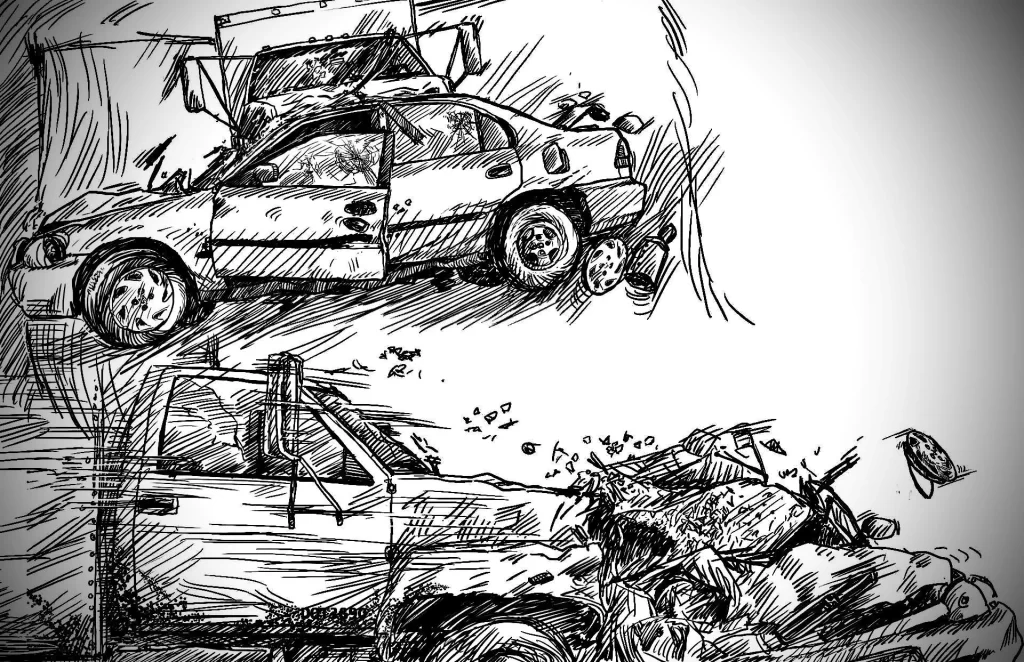
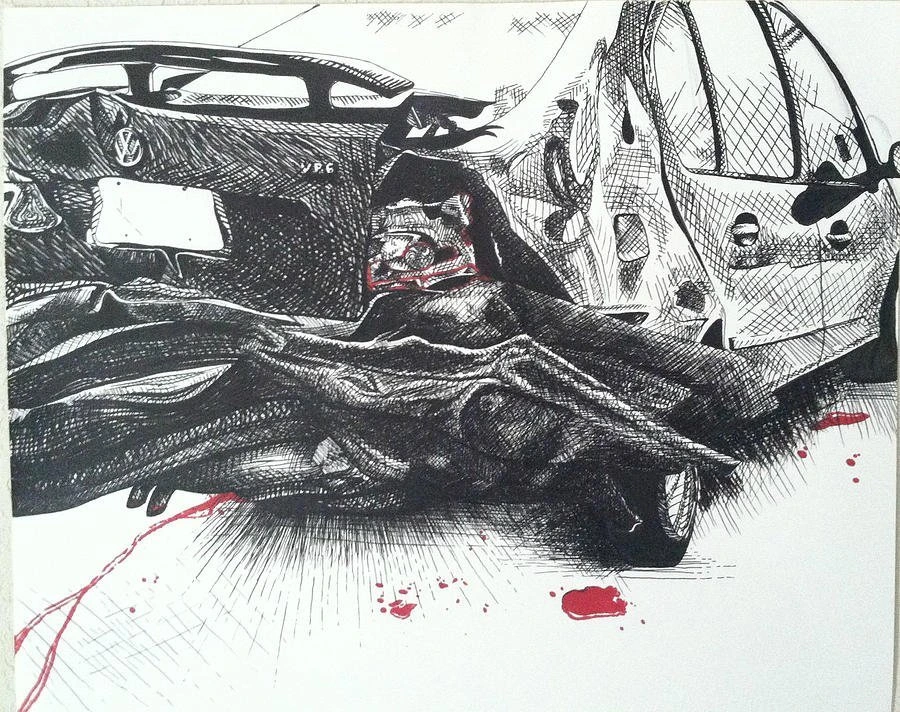

Expert Traffic Accident Drawing and Sketches Services for Legal and Investigative Support
Precision Matters — Scaled Drawings & Forensic Sketches
At Crodymi LLC, our scaled drawings and forensic sketches transform scene details into clear, measurable visuals — perfect for litigation, investigation, insurance claims, and expert analysis.
- Scene drawings for crash, crime, and workplace incidents
- Overhead views with accurate scaling and dimensions
- Sketches based on diagrams, photos, witness statements, and more
Our drawings and sketches are based on verifiable evidence, not guesswork. We incorporate multiple sources to deliver high-precision layouts. Scaled Scene Diagrams: Layouts that match actual dimensions using reliable measurement techniques. Photos & Drone Footage: Used to trace, overlay, or extract visual reference points. Statements & Diagrams: Written or hand-drawn depictions from officers, witnesses, or experts. Site Visits & Maps: Integrated for mapping roads, distances, and object locations. Each sketch is designed to clarify events, highlight key elements, and support expert testimony.
Get started
Start the process today — no upfront payment required. We’ll provide the service now, and you can settle the payment later.
Tell us what you need
Get updates & continue
Drop your email so we can follow up. You can skip if you prefer.
At Crodymi LLC, we understand the critical role a traffic accident drawing plays in accurately portraying the details of a collision. Our team specializes in creating to-scale, highly detailed diagrams that transform complex accident data into clear visual representations. Whether for legal proceedings, insurance claims, or investigative reviews, our drawings offer clarity and precision when it matters most. Unlike general police sketches, our renderings are created with advanced technology and a commitment to accuracy, ensuring every key element is visually accounted for. By collaborating directly with victims and legal representatives, we guarantee that our work reflects the true sequence of events helping establish facts and resolve disputes with confidence.
Clear and Accurate Car Accident Map Creation for Case Clarity
At Crodymi, our car accident map services go far beyond basic scene illustrations. We specialize in transforming vague sketches and incomplete reports into highly accurate, detailed maps that clearly outline the spatial relationships, vehicle positions, and key points of impact. Using advanced technology such as 3D laser scanning, drones, and GNSS systems, we capture every dimension with precision. Each car accident map is developed with both technical accuracy and a deep understanding of the emotional and legal weight such visuals carry. These maps are essential tools for court presentations, insurance claims, and accident reconstructions. They help investigators, attorneys, and adjusters clearly visualize the scene and better understand how events unfolded. By combining state-of-the-art equipment with experienced mapping professionals, we ensure every element of the scene is represented faithfully. With Crodymi, you receive more than just a diagram. You gain a credible visual resource that strengthens your case from every angle.
Car Accident Sketch Services That Capture Every Detail
Crodymi’s car accident sketch services offer exceptional precision in documenting accident scenes. We take traditional sketches to the next level by employing cutting- edge technologies such as 360° cameras, total stations, and GNSS systems. These advanced tools allow us to capture every angle and dimension of a crash site with unparalleled accuracy. Each car accident sketch we produce serves as a reliable, lasting visual record that can be referenced throughout legal proceedings, accident reconstructions, and safety evaluations. These sketches not only reflect the true layout of the scene, but also preserve critical details like vehicle positions, road conditions, and environmental factors. Whether for courtroom presentations or investigative analysis, our sketches provide a clear and unbiased depiction of what happened. With Crodymi’s expertise, you can trust that every detail will be captured and accurately portrayed, ensuring fair conclusions and informed decision-making in any context.
The Crucial Role of Sketching in Investigating Crime Scenes, Motor Vehicle Collisions, and Accident Scenes.
Introduction
In forensic investigations, sketching serves as a vital instrument for documenting and analyzing accident and crime scenes. Beyond its traditional role in design, sketching aids in reconstructing events, preserving evidence, and conveying complex scenarios effectively.
Accurate Representation: Sketches provide precise depictions of accident scenes, capturing spatial relationships and the positioning of evidence. This accuracy is crucial for reconstructing events and understanding the context of incidents. While photographs document visual details, accident scene mapping and accident reconstruction drawings offer complementary perspectives by illustrating measurements and spatial arrangements, ensuring a comprehensive understanding of the scene. Photographs can sometimes distort distances and spatial relationships, but accident sketch drawings allow for the correction of these perceptions, providing a more accurate representation of the scene’s layout. Detailed sketches facilitate clear communication among investigators, legal professionals, and jurors, aiding in the visualization of complex scenarios and supporting the narrative of events. They serve as enduring records of the scene, preserving details that might be overlooked or forgotten over time, and ensuring that critical information remains accessible for future reference.
Commonly Used Sketching Techniques in Accident Documentation: Various techniques are employed to enhance the accuracy and clarity of accident scene drawings. The triangulation method utilizes two fixed points to measure the locations of evidence, creating a triangle that allows for precise plotting on a car accident map. The baseline method involves establishing a straight line between two fixed points and measuring distances along this line and perpendicular to it to locate evidence, aiding in the creation of detailed traffic accident drawings. The polar coordinate method employs a fixed point and measures the distance and angle from this point to the evidence, useful in outdoor scenes where establishing a straight baseline is difficult. The rectangular coordinate method is beneficial in scenes with perpendicular landmarks, involving measurements along two axes to accurately plot evidence positions on a map of accidents. The cross-projection method combines plan and elevation views by unfolding walls onto the floor, providing a comprehensive representation of evidence located on or near walls. These techniques ensure that sketches are not only accurate but also standardized, facilitating effective analysis and communication.
Longevity and Utility of Forensic Sketches: The sketches produced through these methods are crafted to endure, serving as permanent records that can be revisited whenever necessary. Their enduring nature ensures that they remain valuable tools for reference, analysis, and presentation in various contexts, including legal proceedings and investigative reviews. In conclusion, sketching is an indispensable component of forensic investigations, offering clarity, precision, and a lasting visual record of accident and crime scenes. Its role in documenting, reconstructing, and communicating complex scenarios underscores its significance in the investigative process.
For example click here

Preservation of the Scene:
Sketching serves as a valuable method for preserving the scene in its original state. It allows investigators to capture the spatial relationships between various elements, ensuring an accurate representation that can aid in reconstructing events later. Accident scene mapping and accident reconstruction drawings also help victims or witnesses explain a particular scenario to others. By illustrating the positions of vehicles and other pertinent details, these visual aids enhance understanding and communication among all parties involved. SmartDraw

Comprehensive Documentation:
Sketching complements other forms of documentation, such as photography and written reports. It provides a visual summary that can be easily interpreted, helping investigators understand the scene's layout, distances, and key features. Accident scene mapping and drawing of car accidents enhance the clarity of investigative findings by illustrating spatial relationships and the positioning of evidence. Traffic accident sketches and car accident sketches help visualize critical details and aid in accident reconstruction drawing, ensuring a more accurate representation of the scene. These visual aids are essential for effectively communicating the event’s specifics to investigators, legal professionals, and jurors. Additionally, sketches serve as enduring records, preserving details that might be overlooked or forgotten over time, ensuring they remain valuable for ongoing analysis and legal proceedings.

Enhanced Communication:
A well-drawn accident sketch acts as a universal language for investigators, facilitating communication among team members and other stakeholders. It bridges gaps in understanding and ensures that everyone involved in the investigation shares a common visual reference, such as a car accident map or a traffic accident sketch. By clearly illustrating the layout and key features of the scene, accident scene mapping helps investigators, legal professionals, and jurors grasp important details quickly. Accident reconstruction drawings and sketches of car accidents ensure that the information is conveyed effectively, improving coordination and decision-making throughout the investigative process.

Witness Testimony Support:
When presented in court, a detailed accident sketch drawing can assist witnesses in recalling and describing events more accurately. Car accident drawings and traffic accident sketches help clarify the sequence of events, making it easier for jurors to visualize and understand the case. By providing a visual representation of the accident scene mapping, these sketches ensure that all details are communicated clearly, leading to a more accurate understanding of the circumstances surrounding the incident.

Accurate Measurements:
Sketching allows investigators to record precise measurements of distances, angles, and other spatial parameters, such as the drawing of road accidents. This information is crucial for accident reconstruction drawings and aids in determining factors such as speed and trajectory. Road accident drawings help to clarify the positioning of vehicles and objects, supporting the process of accident scene drawing. By accurately documenting the scene, these sketches provide valuable data for reconstructing the accident and understanding its dynamics.

Crime Scene Reconstruction:
Sketches play a vital role in reconstructing crime scenes, such as accident car drawings. By combining physical evidence, witness statements, and expert analysis, investigators can recreate the sequence of events leading up to a crime. Accident sketch drawings provide a visual representation that enhances the clarity of the investigation, helping to determine critical details such as the positions of vehicles or objects involved. This contributes to a more comprehensive understanding of the scene and is essential for accurate accident scene mapping and accident reconstruction drawing.

Documentation of Evidence:
Sketching plays a pivotal role in meticulously documenting crime scenes, ensuring that all evidence—including physical objects and patterns such as blood spatter—is accurately recorded and spatially represented. This process is essential for preserving the chain of custody and facilitating the presentation of a coherent case in court. By integrating crime scene sketches with other forms of documentation, investigators can create a comprehensive visual record that enhances understanding and supports the judicial process.

Timely Analysis:
Drawing of road accidents provides investigators with an immediate tool for on-site analysis. While waiting for more advanced forensic analysis, a preliminary sketch can help identify key areas and patterns that require further examination.

Training Tool:
Sketching is an invaluable training tool for forensic investigators. It helps hone their observational and analytical skills, fostering a deeper understanding of the intricacies involved in crime scene interpretation.

Clarity in Motor Vehicle Collision Investigations:
In motor vehicle collision investigations, sketching aids in representing the positions of vehicles, road conditions, and traffic elements. This clarity is essential for determining fault, understanding contributing factors, and improving road safety.

Multi-Disciplinary Collaboration:
Sketches serve as a medium for collaboration between various experts involved in an investigation, including forensic analysts, accident reconstruction specialists, and law enforcement. This interdisciplinary approach ensures a comprehensive and accurate representation of events.

Courtroom Presentation:
Perhaps most importantly, sketches serve as powerful visual aids during courtroom presentations. They assist legal professionals in explaining complex scenarios to judges and juries, making the evidence more accessible and persuasive.
Conclusion:
In conclusion, sketching is an indispensable tool in forensic investigations, tribunals, and classrooms, playing a crucial role in documenting crime scenes, motor vehicle collisions, and accident scenes. Its multifaceted benefits, ranging from preservation and documentation to enhanced communication and courtroom presentation, underscore the significance of this technique in unraveling the complexities of incidents. As technology continues to advance, sketching remains a timeless and essential skill in the investigator’s toolkit, ensuring that justice is served through a thorough and accurate understanding of the events in question.
When it comes to anything from a car accident map to a detailed car accident sketch, Crodymi stands out as the best go-to option for precision, professionalism, and expertise. Whether you’re trying to map accidents, analyze a map of accidents, or view a map of car accidents for legal or insurance purposes, Crodymi delivers accurate and easy-to-understand visuals. Our team creates high-quality drawing of road accident scenes, realistic traffic accident drawing, and courtroom-ready car accident drawing materials tailored to each case. Every drawing of a car accident, drawing of car accident, or accident car drawing we produce captures the critical details needed for investigations and legal clarity. From a simple road accident drawing to a complex accident sketch draw, we offer unmatched quality and consistency. Choose Crodymi for your accident sketch, car accident sketch, traffic accident sketch, sketch car accident, and accidents sketch needs—because when it matters most, accuracy and trust are everything.
For more info or to get a free Quote: Click here to contact CrodymiIn addition, Crodymi also do diagnostic checks of vehicles to present information about faults, particularly freeze frame data.
Get started
Start the process today — no upfront payment required. We’ll provide the service now, and you can settle the payment later.
Tell us what you need
Get updates & continue
Drop your email so we can follow up. You can skip if you prefer.
Why Accident Scene Sketching is a Game-
Changer in Investigations
Preservation of the Scene
Thorough Documentation
Clearer Communication
Supporting Witness Testimony
Measuring Precision
Measuring Precision
Reconstructing the Scene
Documentation of Evidence
Quick On-Site Analysis
Training Tool
Training Tool
Collision Investigations Made Clearer
Multi-Disciplinary Collaboration
Courtroom Power
Courtroom Power
Frequently Ask Questions
A Traffic Accident Drawing is a detailed visual representation of an accident scene,
illustrating vehicle positions, road layouts, and key points of impact. These drawings aid
legal professionals, insurance adjusters, and jurors in understanding the sequence of
events, clarifying liability, and supporting case arguments.
At Crodymi, we utilize advanced technologies such as 3D laser scanning, drones, and
GNSS systems to capture precise measurements and spatial relationships. This
technological approach ensures that our Traffic Accident Sketches accurately reflect the
scene's true dimensions and details.
Absolutely! Witnesses often struggle to recall specific details, and accident scene
sketches can help jog their memory. By providing a visual reference, sketches allow
witnesses to better describe what they saw, improving the accuracy of their testimony.
In court, these sketches help jurors visualize the events, enhancing their understanding
and aiding in a more accurate judgment.
A Traffic Accident Map includes details such as vehicle positions, road conditions,
traffic signs, points of impact, and surrounding landmarks. These elements collectively
offer a comprehensive overview of the accident scene, facilitating accurate analysis and
reconstruction.
A well-crafted Traffic Accident Sketch serves as a universal visual language, ensuring
that all stakeholders investigators, legal professionals, and jurors share a common
understanding of the accident scene. This shared visual reference improves
coordination, decision-making, and the overall effectiveness of legal proceedings.
Get started
Start the process today — no upfront payment required. We’ll provide the service now, and you can settle the payment later.
Tell us what you need
Get updates & continue
Drop your email so we can follow up. You can skip if you prefer.