
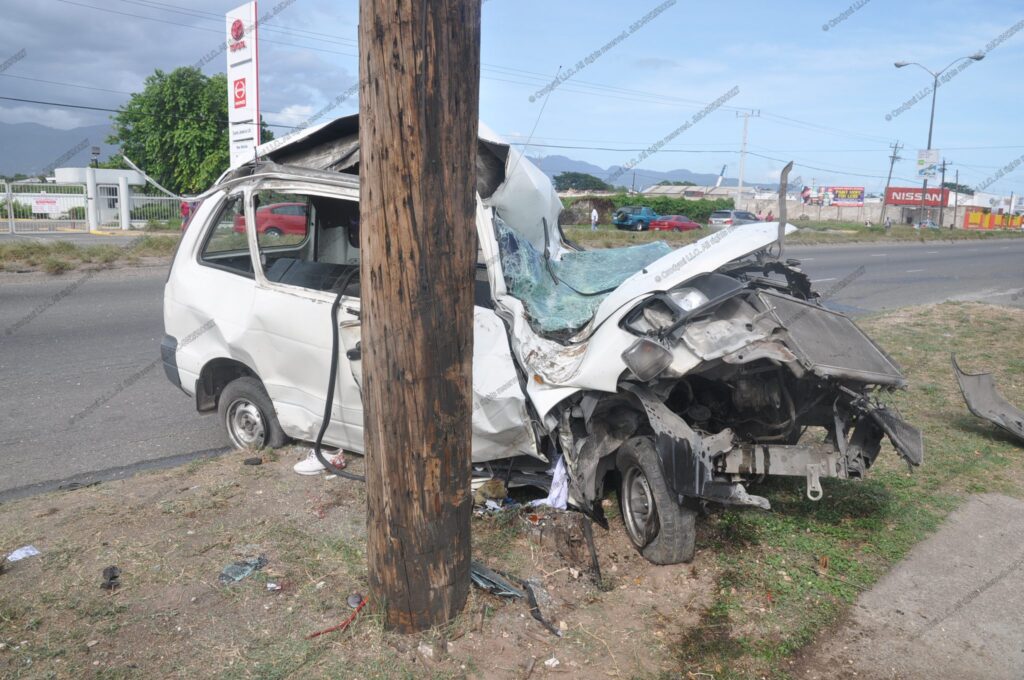
Critical Crash Data Is Being Thrown Away in Salvage Yards Every Day
Every time a totaled vehicle is pushed across the auction yard or into the crusher, the digital truth about that crash may be disappearing with it. Inside the “black box” is objective data that can confirm speed, braking, seat-belt use, and impact severity — if someone captures it in time.
Let Crodymi LLC download your car’s black box data today.
Whether you are an attorney, an injured driver, an insurance professional, or a fleet operator, you do not have to guess what happened. Crodymi LLC can locate, download, and interpret your vehicle’s Event Data Recorder (EDR) crash data before the car is scrapped or the information is overwritten.
What Is Crash Data – and Why Does It Matter?
Modern vehicles quietly record key information in modules such as the Event Data Recorder (EDR), airbag control module (ACM), or powertrain and brake controllers. In a serious crash, these systems often store a snapshot of the few seconds before, during, and immediately after impact.
Depending on the make, model, and year, a download may reveal:
- Pre-crash speed profile (often up to 5 seconds before impact).
- Brake and throttle use – including “no reaction” situations.
- Seat-belt usage for front occupants.
- Airbag deployment timing and whether deployment was commanded at all.
- Delta-V (change in velocity) – a core metric for crash severity and injury potential.
- In some vehicles, steering input, ABS activity, stability control interventions, and more.
It is the difference between arguing over memories and showing the jury what the vehicle itself recorded.
How Salvage Yards Unknowingly Destroy Critical Evidence
Salvage and wrecking yards are not in the evidence business — they are in the space and scrap business. Once a vehicle is declared a total loss, the priority is to move it, strip it, and crush it. Unless someone issues a clear evidence preservation request, the EDR module is treated like any other piece of hardware.
A typical chain of events looks like this:
- The vehicle is towed from the scene to an impound lot, storage yard, body shop, or auction.
- The insurance company declares it a total loss and sells it to a salvage yard or auction.
- No one specifically requests that the EDR or airbag module be preserved for download.
- Technicians remove airbags, cut wiring, and strip parts. The module may be tossed aside or left in place.
- The entire vehicle is eventually crushed or shredded, along with the crash data.
In many cases, a trained expert could have performed a black box / EDR download in 10–20 minutes on-site — but once the crusher runs, that opportunity is gone forever.
Who Loses When Crash Data Is Thrown Away?
1. Injured parties and families
For seriously injured clients and families, EDR data is often the only unbiased witness. When that data is destroyed, their best chance to prove what actually happened can vanish with it. That can affect:
- Liability determinations in disputed intersection or lane-change crashes.
- Evaluation of impact severity to support injury claims.
- Rebuttal of inaccurate narratives about speeding, distraction, or impairment.
2. Attorneys and their trial teams
Without black box crash data, accident reconstruction becomes more dependent on:
- Limited scene photographs and measurements.
- Eyewitness accounts that may be incomplete or biased.
- Assumptions about driver behavior, speed, and timing.
Objective EDR data allows you to cross-check physical evidence, support a persuasive forensic crash animation, and remove ambiguity that opposing counsel can exploit.
3. Insurers and fleets
Insurers and fleet operators also lose when crash data disappears:
- They may miss valid defenses (e.g., unbelted occupants, clear speeding by another vehicle).
- Suspicious or fraudulent claims become harder to challenge.
- Cases can remain open longer and cost more to resolve.
4. Courts, researchers, and the public
Judges and juries must decide based on partial information. Safety researchers lose real-world data that can drive recalls and design improvements. The result is a system where the full truth about many crashes is never seen.
Common Myths That Cost You Crash Data
“The car is totaled, so it is useless now.”
A vehicle can be a total loss and still have a perfectly readable EDR. Even when the front is heavily damaged, the module may have survived and can still be downloaded.
“If the airbags didn’t deploy, there’s no data.”
Many vehicles can record non-deployment events, near misses, or other significant events without an airbag firing. The only way to know is to have a qualified expert check the system.
“The auction or yard will keep it if we need it later.”
Salvage yards usually operate on tight space and quick turnover. Unless they receive a clear written request, they will not treat the vehicle as evidence.
“We’ll worry about the black box later if the case develops.”
By the time the case “develops,” the car may have already been crushed or its module removed and lost. Crash data preservation is often time-sensitive. Delay is the enemy.
Practical Steps to Protect Your Vehicle’s Black Box Data
1. Act early — as soon as a serious crash is on your radar
Once you know a collision involves serious injury, disputed liability, or a commercial vehicle, take immediate steps to:
- Identify where the vehicle is (impound, storage yard, body shop, Copart, IAAI, local salvage yard, etc.).
- Confirm whether it is driveable, a total loss, or pending auction/salvage.
2. Send a focused evidence preservation / hold letter
A one-page letter to the current custodian (yard, auction, or insurer) can:
- Request that the vehicle and its modules not be altered or destroyed without notice.
- Reserve the right for a qualified expert to inspect and download EDR data.
- Ask for notification before the vehicle is released, sold, or crushed.
Crodymi LLC can assist attorneys in drafting language that is practical and specific to black box data preservation.
3. Involve a crash data / EDR specialist early
A trained accident reconstructionist with the proper EDR tools can:
- Confirm whether the make and model is supported for EDR download.
- Travel to the yard or body shop and capture the data on-site.
- Maintain a clean chain of custody and document the process for court.
- Interpret the data and integrate it with scene evidence, photographs, and forensic crash animations.
4. Document everything around the vehicle
In addition to the black box download, it is helpful to:
- Photograph the vehicle, VIN plate, and any visible damage from multiple angles.
- Capture images of the module location and connectors before and after accessing them.
- Keep copies of tow bills, storage invoices, yard communications, and titles.
This documentation makes it much easier to explain the evidence trail to a jury, judge, or opposing expert.
Quick FAQ: Car black box data and EDR data retrieval
These FAQs explain how car black box data, also called EDR data, is captured, how EDR data retrieval works, and what it means when you ask questions like “How do I get data from my car after accident?” or “Who can pull my car’s black box info?”.
Can my car black box data prove what really happened in the crash?
Yes, in many cases your car black box data (Event Data Recorder / EDR data) can provide a very clear picture of what happened in the seconds before and during the impact. A proper EDR data retrieval can show pre-crash speed, braking and throttle use, seat-belt status, and the change in speed (Delta-V). When this car black box data is combined with scene measurements, photographs, and professional accident reconstruction, it can help prove how the crash occurred, who was accelerating or braking, and how severe the collision really was.
How do I get data from my car after accident and what is EDR data retrieval?
If you are asking, “How do I get data from my car after accident?”, the technical term for that process is EDR data retrieval. This involves connecting specialized equipment to your vehicle’s black box (airbag control module or other EDR module) and safely downloading the recorded crash data. At Crodymi LLC we use professional tools, such as the Bosch CDR system and manufacturer-specific cables, to access your car black box data at storage yards, body shops, salvage yards, or in our lab. The goal is to retrieve and preserve that data before the vehicle is repaired, sold, or crushed.
Who can pull my car’s black box info and interpret it?
When you ask, “Who can pull my car’s black box info?”, you are really looking for a trained crash data specialist or accident reconstructionist. Not every shop or dealership is equipped to perform proper EDR data retrieval or to explain the results. Crodymi LLC focuses on pulling your car’s black box info in a forensically sound way, preserving the original files, and then interpreting the car black box data in the context of the roadway evidence, vehicle damage, and injury claims so that attorneys, insurers, and crash victims can rely on it with confidence.
How long does my car keep the black box / EDR data?
The length of time your car black box data is stored depends on the vehicle and the design of its EDR system. Some modules keep a crash event until the data is overwritten by a new crash or the module is replaced; others may begin to overwrite information after a certain number of key cycles. Because there is no single rule and vehicles in storage, salvage, or auction yards can move quickly, it is important to schedule EDR data retrieval as soon as possible after the accident so that the original car black box data is not lost.
Will insurance or the other side already have my car black box data?
Sometimes insurers or opposing parties will perform their own EDR data retrieval, but there is no guarantee that they have captured or will share your car black box data. In many cases, no one has pulled the crash data at all, and the vehicle is on its way to a salvage yard where the information may be destroyed. That is why attorneys, crash victims, and fleets often hire an independent expert like Crodymi LLC to pull the car’s black box info, preserve the original files, and provide an unbiased interpretation of what the data actually shows.
Can I read and interpret the car black box data report myself?
The report generated after EDR data retrieval is highly technical and can be easy to misinterpret without a crash reconstruction background. The graphs and tables inside the file must be matched to the exact moment of impact, vehicle orientation, roadway evidence, and any occupant or injury information. Working with Crodymi LLC ensures your car black box data is translated into plain language and, when needed, integrated into diagrams, reports, or forensic animations that clearly answer questions like “What is car black box data?”, “Where do I get data from my car after accident?”, and “Who can pull my car’s black box info?”.
No matter where in the world you are — Texas, Oklahoma, the DFW metroplex, Houston, Austin, Denton, or anywhere else — Crodymi LLC can fly or drive to your location, or you can visit us or mail your black box module to us. Many clients come to us with the same questions: Can my car black box data prove what really happened in the crash?, How do I get data from my car after accident?, and Who can pull my car’s black box info?. Our team is here to guide you through the full EDR data retrieval process from the first phone call to the final report.
Stop letting your crash data be treated like scrap metal.
Every day, salvage yards crush vehicles that still hold powerful digital evidence in their black boxes. If a serious crash touches your practice, your family, or your fleet, make EDR preservation part of your standard response — not a last-minute rescue mission.
Build stronger, data-driven cases
Use black box data to support liability theories, cross-check witness accounts, and build compelling demonstratives for mediation and trial.
Let your car “tell its side” of the story
When you feel misunderstood or blamed for a crash, the data inside your vehicle may be the most objective voice in the room.
Reduce uncertainty and resolve claims faster
Incorporate timely EDR downloads into your serious-loss workflow to clarify exposures, protect your drivers, and inform risk decisions.