
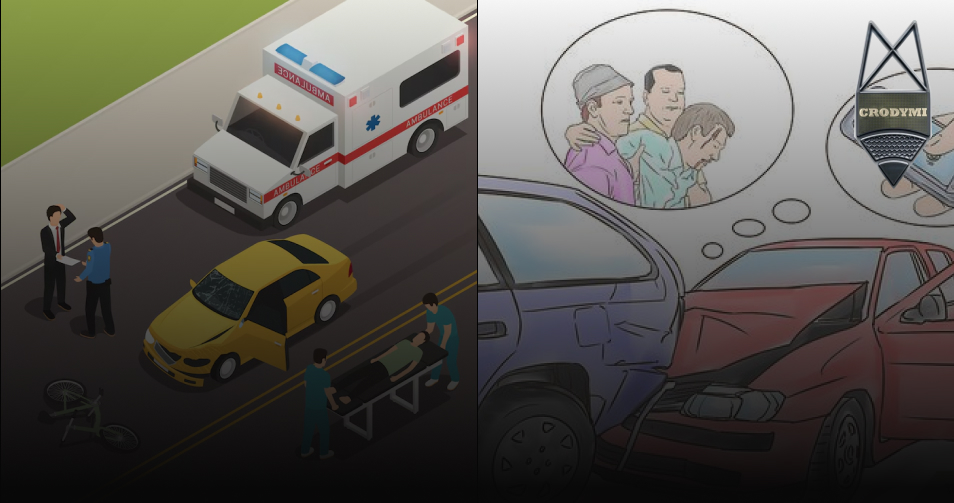
Accurate visuals are at the heart of every trustworthy traffic accident report. Investigators, lawyers, and insurance companies rely on traffic accident sketches and diagrams to figure out what really happened, how vehicles moved, where they were positioned, and what factors led to the crash. These visuals turn complex information into clear stories that help everyone understand the scene.
As technology improves, one question keeps coming up: Are digital sketches better than traditional hand drawings when it comes to accuracy, usefulness, and presentation? This guide looks closely at both methods, their strengths, weaknesses, and when each is most effective, so professionals can choose what works best for reports that hold up in court and insurance reviews.
Understanding Why Sketches Play An Important Role in Traffic Accident Reports
Every accident investigation starts with data, like skid marks, impact angles, road shape, and vehicle paths. But numbers alone don’t tell the whole story. That’s where a traffic accident drawing comes in. These visuals help investigators show how everything fits together, from where the cars were to how the crash unfolded.
A good vehicle accident diagram shows more than just the positions of vehicles. It also illustrates how fast they were moving, what direction they were traveling, and whether anything in the environment played a part. Investigators usually draw these on-site to capture the physical details before anything changes.
Traditionally, sketches were done by hand using rulers and protractors. But now, digital tools have become widely used in the United States. This program lets users drag and drop predesigned vehicles, signs, and road elements onto a digital workspace to create accurate, professional-looking scaled drawings and sketches. These can easily be added to digital case files or displayed in court presentations. The shift to digital tools has also led to accident reconstruction animation, where 2D sketches are turned into 3D moving models.
Why Visual Evidence Matters So Much?
Words can sometimes be misunderstood, but visuals make things clear. In serious accidents, a collision diagram can aid investigators and lawyers in clearly seeing how the crash happened. Lawyers use these drawings to show who was responsible, while insurance companies use them to figure out who was at fault and how much damage was done.
Forensic experts also depend on accurate reconstruction drawings to test whether the physical evidence matches witness accounts or data from vehicle sensors. Without visual proof, much of an investigation would rely on assumptions instead of solid evidence.
Digital sketches are especially useful because they create a consistent “language of evidence.” They remove human inconsistencies in measurement or perspective, ensuring everyone, from police officers to engineers to jurors, is looking at the same, reliable information.
Advantages of Digital Sketches in Modern Accident Reconstruction
Technology has completely changed how accident scenes are documented. A digital car crash diagram is an advanced evidence tool that improves precision, saves time, and boosts credibility in legal and insurance work.
Precision and Scale
Digital tools like Easy Street Draw let investigators draw directly to scale by entering real measurements. That means the vehicle accident diagram matches the exact dimensions of the crash scene. Small differences in measurements can completely change how a collision is interpreted; digital precision helps prevent that. Hand sketches, on the other hand, depend on the investigator’s ability to estimate scale manually, which can lead to small but important errors.
Efficiency and Consistency
Creating digital sketches is much faster than drawing them by hand. Investigators can use ready-made templates for intersections or highways and just tweak the details based on witness accounts or video evidence. If new information appears, they can quickly update the file without having to redo the whole sketch. Digital diagrams also integrate with central databases, helping agencies keep reports consistent across departments.
Integration with Advanced Forensic Tools
A digital traffic accident sketch is not just a simple image; it serves as a base for advanced analysis. These sketches can link with tools, which create realistic reconstruction drawings that incorporate vehicle sizes, terrain, and environmental conditions. Additionally, when these digital sketches are imported into an animation software for accident reconstruction, they can offer a comprehensive view of the incident that an expert can view from the comfort of their office or home.
Enhanced Presentation for Legal and Insurance Use
Courts and insurance companies rely on clear visuals. A digital vehicle accident diagram looks clean, objective, and professional. Unlike a paper sketch, it won’t smudge, fade, or have messy handwriting.
Digital files can also include metadata, like timestamps, version history, and measurement logs. These features boost credibility, provide transparency, and offer traceability, which is vital in court cases where every detail is questioned.
Easy Storage and Collaboration
Digital sketches are easy to store, share, and archive. Investigators don’t have to worry about lost notebooks or damaged paper copies. Teams can collaborate in real time, edit files together, and upload updates to shared drives or cloud systems.
At Crodymi, we rely on secure digital scaled drawings and sketches to document each case. Every file of animated accident sketch is archived safely and can be retrieved anytime. This helps us ensure long-term reliability for both legal and forensic use.
Limitations and Use Cases of Traditional Hand Sketches
Even though digital tools are now standard, hand-drawn sketches still have their own place as well. They’re simple, fast, and useful when technology isn’t immediately available.
Field Efficiency
At an accident scene, responders might not have access to laptops or tablets. A quick drawing of a road accident on paper can immediately record important details like vehicle placement and skid marks. These car crash sketches capture raw information that can later be turned into detailed digital visuals.
Flexibility for Experienced Investigators
Some seasoned investigators still like to draw sketches by hand. For them, making a car-crashing drawing feels more natural and straightforward. They can easily judge distances and angles without using any digital tools, which makes hand sketches useful for quick on-site work, especially during emergencies or in places where technology isn’t available.
Limitations in Precision
Drawings of a car crash made quickly in bad weather or poor lighting can easily distort proportions or angles. Even small mistakes can affect how a collision is interpreted later. Because of this, most experts now use hand sketches only as a first draft before creating a digital version.
Lack of Integration with Digital Systems
Paper sketches exist on their own; they can’t connect to GPS data, laser measurements, or 3D modeling software. To use them in digital reports or accident reconstruction animation, analysts must redraw or scan them, which can lead to errors. They also lack digital metadata, making verification harder in court.
Comparing Real-World Applications
| Criteria | Hand Sketches | Digital Sketches |
| Accuracy | Depends on the investigator’s skill; prone to scale error | High precision with automated scaling |
| Time Efficiency | Quick in the field but slower for revisions | Fast creation, instant edits |
| Integration | Standalone; no direct data link | Syncs with mapping, LiDAR, and animation tools |
| Courtroom Presentation | Informal, may appear subjective | Professional, traceable, and easily validated |
| Storage & Archiving | Physical storage; risk of damage or loss | Secure, shareable, and cloud-stored |
| Initial Field Use | Excellent for quick documentation | Dependent on device availability |
Which is Better?
Digital sketches usually perform better than hand drawings in almost every way, except for how quickly they can be made on the spot. That’s why many experts use a mix of both methods; they start with quick hand notes and sketches at the scene, then turn them into accurate digital versions later during their analysis.
Why Hybrid Approaches Deliver the Best Results
The most effective investigations use both methods strategically. Field officers start with a manual accident sketch to capture essential details quickly. Once back in the lab or office, reconstructionists refine this into a digital traffic accident sketch or collision diagram using professional software.
This combination allows the best of both worlds: the immediacy of observation and the accuracy of technology. It also ensures continuity between the scene and the final report, preserving every detail without sacrificing precision.
For complex cases involving multiple vehicles or disputed liability, digital sketches can be taken a step further into animated accident reconstruction. This transformation lets analysts show exactly how the crash unfolded in motion, combining timing, physics, and spatial data into a visual sequence that’s easy for non-technical audiences to understand.
At Crodymi, our forensic specialists use this hybrid approach every day. We help clients transition seamlessly from on-scene sketches to fully scaled vehicle accident diagrams and accident reconstruction animation presentations that hold up under courtroom scrutiny.
How Digital Tools Improve Communication and Credibility
Communication is one of the biggest challenges in accident reconstruction. Investigators, insurers, and attorneys come from different technical backgrounds. A visual medium bridges these gaps.
Digital sketches and reconstructions eliminate ambiguity by using standardized symbols, colors, and measurements. They can highlight critical evidence, like the point of impact or skid mark direction, without clutter. When combined with LiDAR scans or aerial imagery, a digital car accident diagram can overlay exact geographical coordinates to support expert testimony.
Moreover, digital tools enhance transparency. Every edit and measurement can be logged and timestamped, making it easier to demonstrate the chain of custody in legal proceedings. That level of documentation simply isn’t possible with paper sketches.
Legal and Forensic Implications
In a court of law and legal settlements, accuracy is everything. Courts must be sure that any visual evidence truly matches the real data. Digital sketches made with approved measuring tools give judges and lawyers confidence that what they’re seeing is reliable and trustworthy.
A clean, scalable traffic accident drawing not only looks professional but also meets evidentiary standards. By contrast, a smudged or uneven manual drawing could be challenged for subjectivity or error.
Digital files also make it easier to reproduce identical copies for all parties involved, reducing disputes about authenticity. The same cannot always be said for physical sketches, where variations in scanning or reproduction can affect interpretation.
Technology Spotlight: Easy Street Draw
Among all available tools, Easy Street Draw remains one of the most respected programs in the United States for creating digital traffic diagrams. Because of its standardization, agencies across multiple states use it to maintain consistency in reporting. It simplifies the creation of digital collision diagrams that can later be animated for advanced forensic visualization.
Which Type Works Best for Reliable Traffic Reports?
When measured by accuracy, speed, and presentation quality, digital sketches have a clear advantage. They provide precise scaling, integrate easily with modern tools, and produce visuals that hold strong in both insurance and courtroom contexts.
However, hand sketches are still vital in the early documentation phase. A simple on-site drawing helps preserve ephemeral evidence, like debris placement or vehicle positions, before the scene changes. Once that data is secured, transitioning to digital ensures the report remains complete, scalable, and credible.
The best results come from combining both: immediate manual sketching followed by digital refinement. This workflow ensures that no detail is missed and every visual can withstand legal examination.
At Crodymi, we turn basic sketches into clear, data-backed digital visuals. Our crash, crime, and accident scene animation service helps transform simple drawings into detailed, realistic reconstructions that show exactly what happened with accuracy and clarity.
Conclusion
Both digital and hand sketches serve essential roles, especially when it comes to traffic accident reporting. Hand sketches capture the moment, while digital visuals perfect the details. Yet, as modern cases demand more data accuracy, digital diagrams have become the gold standard for professional reporting.
Digital methods allow deeper integration with forensic data, clearer communication in legal settings, and faster collaboration among experts. Tools ensure that each case is not only documented but also visualized with scientific precision.
Crodymi helps professionals achieve this balance. With nearly two decades of experience providing independent forensic investigations and data analytics, Crodymi delivers scalable, defensible visuals that transform evidence into understanding. When accuracy matters most, digital sketches lead the way.
Frequently Asked Questions
What are the differences between digital and hand-drawn accident sketches?
Digital sketches use software to produce accurate, scalable visuals integrated with forensic data. Hand sketches rely on manual estimation and are often used for quick, preliminary documentation.
Are digital sketches accepted in U.S. courts?
Yes. Digital sketches and computer-generated animations are generally admissible in U.S. courts under the Federal Rules of Evidence, which govern how evidence is evaluated in federal cases and in many state courts. Under Rule 702, expert witnesses can present opinions or explanations using specialized knowledge, including digital animations or sketches, as long as they are based on verified data and assist the court in understanding the evidence or determining a fact in issue.
Why do professionals prefer Easy Street Draw?
Professionals like using Easy Street Draw because it makes creating accident diagrams faster and easier. It comes with ready-made templates, GPS features, and measuring tools that help them make accurate and consistent visuals for their reports and presentations.
Can hand sketches still be useful?
Yes. Hand sketches are still very helpful, especially right after an accident. They let investigators quickly note down important details on the spot, which can later be turned into detailed digital versions.
How does animated accident reconstruction improve understanding?
Animated accident reconstructions show how a crash happened step by step, including the speed, timing, and movement of vehicles. These visuals make it easier for people like jurors or clients to understand what happened without needing technical knowledge.
What’s the role of collision diagrams in insurance claims?
Collision diagrams help insurance companies see exactly how an accident happened. They clearly show vehicle directions and impact points, making it easier to decide who was at fault and how much damage occurred.
How does digital sketching benefit long-term investigations?
Digital sketches are great for long-term cases because they can be safely stored, easily updated, and used with future investigation tools. They keep the data accurate and accessible whenever it’s needed again.