
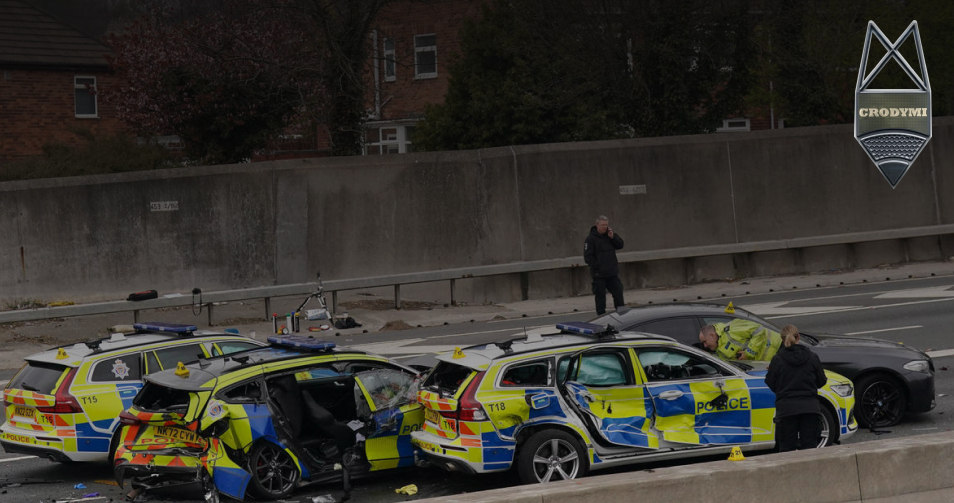
Crash Scenes Made Clear: Turning Complex Collision Evidence Into Something People Can Understand
A serious traffic collision can generate hundreds of pieces of information: vehicle damage, roadway measurements, photographs, witness statements, surveillance video, electronic vehicle data, tire marks, final-rest positions, traffic-control information, and reconstruction calculations. Individually, those pieces may be difficult for a client, attorney, insurer, investigator, mediator, or jury to visualize.
Forensic crash animation helps bridge that gap. Instead of asking a viewer to mentally assemble pages of measurements, diagrams, photographs, and technical data, a properly developed accident reconstruction animation can organize supported information into a visual sequence showing how vehicles approached, interacted, collided, and moved afterward.
The purpose of forensic animation is not to make a theory look real. Its value comes from making documented evidence, reconstruction analysis, and supported vehicle motion easier to see, test, explain, and understand.
At Crodymi LLC, visual reconstruction can be developed from multiple evidence sources rather than from appearance alone. Depending on the case, that may include EDR / black-box vehicle data , photographs, video, vehicle damage, measurements, calculations, and forensic crash-scene mapping .
The objective is straightforward: take a complicated collision and make the relevant technical evidence understandable without disconnecting the visualization from its underlying sources.
How Real Crash Data Can Become a 3D Accident Reconstruction
A useful forensic animation starts long before the first vehicle is animated. The foundation is the underlying crash evidence. Measurements and electronic data establish constraints that help determine where objects should be placed, how vehicles may have moved, and whether the visual sequence is consistent with the technical analysis.
Event Data Recorders are particularly valuable because they can preserve technical information associated with a crash event. The National Highway Traffic Safety Administration describes EDRs as devices or functions that record information related to a vehicle event or crash. Depending on the vehicle and recorded event, available parameters can include information associated with vehicle speed, braking, accelerator input, and occupant-restraint systems.
That information does not automatically reconstruct a crash by itself. It becomes more powerful when evaluated with physical evidence, scene geometry, vehicle damage, photographs, video, and appropriate reconstruction methodology.
Learn more about Crodymi's EDR black-box data retrieval and analysis and expert accident reconstruction services .
Technical reference: National Highway Traffic Safety Administration (NHTSA), Event Data Recorder .
Prompting AI With Crash-Scene Data: From Description to Evidence-Grounded Visualization
Generative artificial intelligence creates a new opportunity in forensic crash animation and accident reconstruction visualization. Instead of beginning with an empty digital environment and manually creating every visual element, AI-assisted workflows can help accelerate scene development, environmental detail, realistic materials, lighting, vehicles, objects, and other visual components.
The more important development, however, is evidence-conditioned prompting. Rather than giving an AI system only a generic instruction such as “create a traffic crash,” the visualization can be developed around documented case information.
Scene information may include:
- Measured roadway width, curvature, grades, lanes, shoulders, and medians
- Documented vehicle positions and final-rest locations
- Impact areas, tire marks, gouges, debris, and other physical evidence
- Vehicle dimensions, orientation, and documented damage
- EDR / black-box data and supported vehicle-motion parameters
- Drone photographs, LiDAR, photogrammetry, RTK/GNSS, and scene measurements
- Dashcam, CCTV, surveillance, or other time-based imagery
- Documented lighting, weather, visibility, traffic controls, and roadway context
Feeding better information into an AI-assisted workflow can improve its usefulness because the scene can be developed around known constraints instead of allowing the system to invent every element. This does not mean that an AI-generated result is automatically correct. It means AI can become a more capable visualization tool when its output is controlled, compared against evidence, and reviewed by a knowledgeable professional.
Realism Is Powerful — But Realism Is Not Proof
Modern AI can produce highly realistic roads, vehicles, buildings, lighting, textures, reflections, weather conditions, and environmental details. This can make a reconstruction substantially more visually convincing than older low-detail computer graphics.
But a photorealistic image can still contain an incorrect vehicle position, an invented road feature, an unsupported trajectory, or an inaccurate collision sequence. For forensic use, visual realism and technical accuracy must therefore be treated as separate questions.
AI can improve how a reconstruction looks. Evidence and validation determine whether the important parts of that reconstruction are supportable.
This distinction is becoming increasingly important in current research. Recent work on AI-assisted traffic accident reconstruction has focused on constraining generated vehicle motion with geometry, speed, collision relationships, and physical consistency rather than optimizing only for something that appears visually plausible.
Research references:
National Institute of Standards and Technology,
Reducing Risks Posed by Synthetic Content
.
Guan, Y. et al. (2026),
TRACER: Training-Free Closed-Loop Structured Inference for Traffic Accident Reconstruction
.
“Crash Scenes Made Clear” — Written and Composed by Nouman Nadeem
Technical evidence is most valuable when people can understand it. The “Crash Scenes Made Clear” creative project was developed around that same idea: complicated collision information can be communicated in a way that is more accessible, memorable, and visually understandable.
The creative presentation complements Crodymi LLC's broader mission of converting complex technical information into material that clients, attorneys, investigators, insurers, and other decision-makers can more readily understand.
If this article or creative feature introduced you to Crodymi LLC, reference Promo Code 706F4EF779 when contacting us. Under the promotional arrangement associated with this feature, a portion of Crodymi's earnings from qualifying engagements attributed to this code is paid to the contributing author.
Promotional attribution is subject to the applicable engagement and Crodymi LLC's referral arrangement. Mention the code when first requesting service so the referral can be properly identified.
Where Forensic Crash Animation Can Add Value
A reconstruction report may contain calculations, tables, diagrams, photographs, vehicle data, and technical terminology. Those materials remain important, but animation can provide another way of communicating the same analysis by placing supported information into a time-based visual environment.
Depending on the purpose and available evidence, a 3D forensic accident animation may help illustrate roadway geometry, lines of sight, vehicle trajectories, pre-impact movement, areas of impact, post-impact movement, timing relationships, visibility, and other technically supported elements of a collision.
A stronger visualization should answer four questions:
- Where did the underlying information come from?
- Which parts of the scene were measured or documented?
- Which vehicle movements were calculated or otherwise supported?
- Which elements exist only to provide visual context?
The future of forensic animation is not simply more realistic computer graphics. It is better integration between evidence, measurement, reconstruction analysis, artificial intelligence, and clear visual communication.
Crodymi LLC provides forensic traffic crash and accident animation services , EDR / vehicle black-box data retrieval and analysis , forensic scene mapping , and accident reconstruction report services . These services can be used separately or integrated when the facts of the investigation require multiple forms of technical evidence and visualization.
Technical References & Further Reading
National Highway Traffic Safety Administration.
Event Data Recorder research and technical information.
NHTSA Event Data Recorder
.
National Institute of Standards and Technology.
Reducing Risks Posed by Synthetic Content, NIST AI 100-4.
NIST AI 100-4
.
Guan, Y., Wang, C., Rao, B., et al. (2026).
TRACER: Training-Free Closed-Loop Structured Inference for Traffic Accident Reconstruction.
View Research
.
Have a Crash That Needs to Be Explained Clearly?
Whether you already have EDR data, photographs, video, measurements, or are starting with an incomplete set of evidence, Crodymi LLC can review the available information and help determine the appropriate next step.
Get started
Start the process today — no upfront payment required. We’ll provide the service now, and you can settle the payment later.
Tell us what you need
Get updates & continue
Drop your email so we can follow up. You can skip if you prefer.