

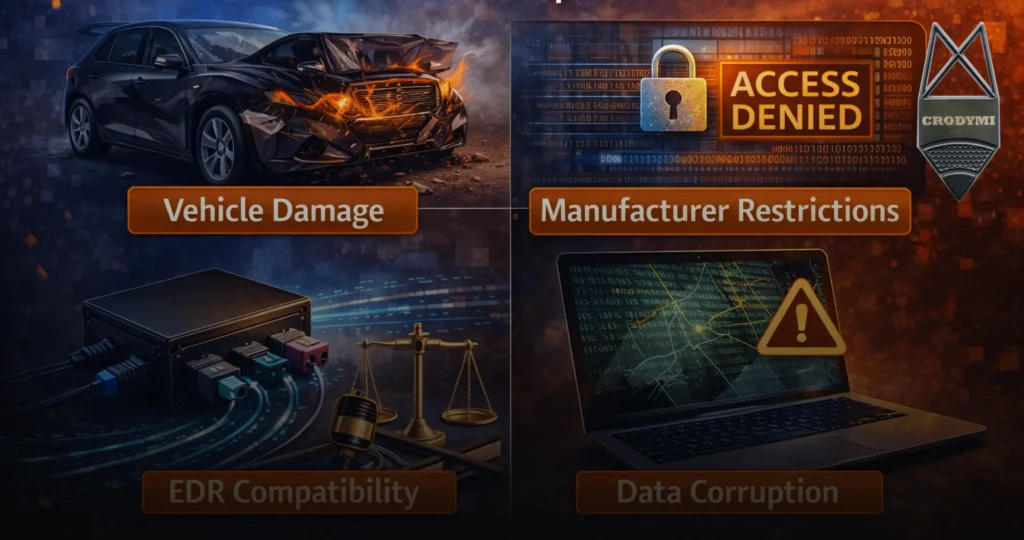
Today, investigations depend less on guesswork and more on digital evidence to understand what happened before, during, and after a vehicle incident. Event data retrieval is now a key tool for accident reconstruction experts, legal teams, and safety analysts. However, getting this data is not always straightforward.
Event data retrieval means getting recorded information from a vehicle’s onboard systems, usually after a crash or serious incident. This data can show speed, braking, throttle use, seatbelt status, and other important details. Although this information is valuable, retrieving and understanding it comes with real challenges.
This article explains the four main challenges professionals face with event data retrieval and why these issues require technical skill, accuracy, and following rules. The aim is to keep things clear and simple. First, we’ll cover the basics before looking at the first two challenges.
Understanding Event Data Recorders in Modern Vehicles
Event Data Recorders, or EDRs, act as silent witnesses inside a vehicle. People often call them black boxes, but they are different from those used in airplanes. An EDR records certain vehicle details when something triggers it, usually a crash or sudden stop.
A car event data recorder captures snapshots of vehicle behavior seconds before and after a crash. This may include vehicle speed, brake application, engine RPM, throttle position, steering input, and seatbelt status. In many investigations, this data becomes the backbone of factual analysis.
Most cars with EDRs have them built into parts like the airbag control module or engine control unit. These recorders do not keep a full driving history. They only save certain data during specific events, so timing and careful extraction are very important.
Professionals rely on crash data retrieval to reconstruct collisions with greater confidence. When interpreted correctly, EDR data helps validate or challenge witness statements, clarify liability, and strengthen forensic conclusions.
Organizations that specialize in Vehicle data retrieval & analysis services understand that proper access and interpretation require more than software alone. Expertise matters at every step, starting with knowing what challenges lie ahead.
Challenge 1: Manufacturer Differences and Data Accessibility
A major challenge in event data retrieval is that each manufacturer does things differently. Car makers use their own designs, data formats, and ways to access EDR systems. There is no single standard that works for every brand.
An EDR vehicle produced by one manufacturer may store data differently from another, even within the same model year. Parameters recorded, sampling rates, and event triggers often vary. This fragmentation complicates extraction efforts, especially in multi-vehicle incidents involving different makes.
Access restrictions make things even harder. Many manufacturers require special software, cables, and approved hardware to get the data. Without the right tools, you might not get the EDR data at all or could damage the evidence.
Electric and hybrid cars add more challenges. Features like advanced driver assistance, remote updates, and encrypted storage can make data harder to reach. Getting data from these vehicles often requires ongoing training and the latest equipment.
Investigators also have to deal with vehicle damage. Serious crashes can cut power, damage memory, or break the data source. In these situations, getting the data out safely takes careful, expert handling.
Professionals offering EDR black box data retrieval & analysis know that success depends on understanding each brand’s systems and keeping up with new car technology.
Challenge 2: Data Accuracy and Interpretation Issues
Getting the data is just the first step. Making sense of it is just as hard. Raw EDR data needs technical know-how, calibration knowledge, and context to avoid mistakes.
Timing discrepancies often cause confusion. Data timestamps may reference airbag deployment, ignition cycles, or internal module clocks. Without understanding these reference points, analysts risk drawing incorrect conclusions about vehicle behavior.
Sensor reliability also plays a role. During high-impact collisions, sensors may record extreme values that appear contradictory without proper context. Wheel speed sensors, yaw rate sensors, and brake inputs must be cross-checked against physical evidence.
A car’s event data recorder collects data in milliseconds. Even small mistakes in reading this data can cause big errors in interpretation. This is especially important in legal cases where the results affect liability, insurance, or court testimony.
Differences in calibration between car models make analysis harder. Even similar cars might record throttle or brake pressure in different ways. Analysts need to know how each system works and records data.
Accurate crash data retrieval means matching digital data with evidence from the scene, vehicle damage, and the environment. The data should support what really happened, not replace it.
Experts in analysis often recommend resources like the ’Learn more about EDR data retrieval guide‘ to highlight why informed interpretation is important.
Challenge 3: Legal and Privacy Barriers in Event Data Retrieval
Technology is not the only factor in accessing vehicle event data. Legal and privacy rules often decide if the data can be retrieved. In the U.S., event data usually belongs to the vehicle owner. This means investigators must balance their needs with privacy rights.
Some professionals think getting data from a car EDR is easy once they have the vehicle. In fact, they may need consent, a court order, or a subpoena. These rules change depending on the location, type of case, and who owns the vehicle.
Insurance cases, lawsuits, and criminal investigations all have different rules for access. Police may have more authority in some situations, but keeping good records and following the chain of custody is always important. If permissions are not handled correctly, evidence could be thrown out or challenged in court.
Privacy issues go beyond just who owns the car. Modern vehicles keep sensitive information about how people drive, like speed, braking, and seatbelt use. Because of this, those handling the data must follow strict rules to keep it confidential.
Cars with advanced systems often store information in several places. An EDR vehicle might have overlapping data from safety features, entertainment systems, and telematics. Each of these may have different privacy rules.
Professionals working with cars with EDR technology need to keep up with changing rules. Following the law is a must. Getting the right permissions, storing data securely, and keeping clear records protect both investigators and clients.
Organizations that focus on ethical data handling lower legal risks and keep data accurate. Here, experience and careful procedures really matter.
Challenge 4: Lack of Standardization and Skilled Personnel
There is a skills gap in event data retrieval. Technology has moved ahead faster than training. Many organizations have the tools, but not enough trained people to use them properly.
There is no single rule for how an automotive event data recorder stores information. Tools may not always work together, and software updates can change how data is extracted. Without regular training, even experts can fall behind.
Mistakes often happen at the start. Using the wrong power, connecting cables incorrectly, or using old software can damage the data. Once digital evidence is lost, it is hard to get back.
Interpreting the data adds to the problem. Knowing how sensors work, when they trigger, and how modules behave takes special knowledge. Reading raw data without context can lead to mistakes.
The lack of standard rules also affects reporting. Different analysts might use different terms or make different assumptions. This inconsistency can hurt credibility in court or during expert reviews.
Working with specialists who focus only on vehicle data helps close this skills gap. Crodymi vehicle data retrieval expert teams use proven methods, reliable tools, and structured processes for every case.
Why These Challenges Matter More Than Ever
Event data retrieval is now a key part of modern accident investigations. As cars use more electronics, the accuracy and reliability of event data have a big impact on reconstructions, legal decisions, and safety checks. The four challenges discussed earlier are now even more important because vehicle data plays a bigger role.
There are several reasons why these challenges need urgent attention:
- Growing dependence on vehicle event data in investigations: Courts, insurers, and forensic professionals increasingly rely on digital vehicle evidence to establish facts. Errors in extraction or interpretation can weaken conclusions and reduce evidentiary value.
- Rapid evolution of vehicle technology without universal standards: Manufacturer-specific systems, proprietary formats, and frequent software updates complicate access to event data. Inconsistent structures across vehicle platforms increase the risk of incomplete or failed retrieval.
- Higher stakes tied to data accuracy and interpretation: Small misinterpretations of recorded vehicle behavior can significantly alter accident timelines and fault assessments. Accurate analysis requires technical expertise, calibration knowledge, and correlation with physical evidence.
- Stricter legal and privacy expectations surrounding vehicle data: Data ownership rules and privacy regulations require compliant handling practices. Improper access or documentation can result in evidence exclusion or legal challenges.
- Limited availability of qualified event data specialists: Tools alone do not guarantee reliable outcomes. A shortage of trained professionals increases the likelihood of data loss, misinterpretation, or flawed reporting.
- Increased scrutiny in serious injury and fatal collision cases: High-impact cases demand defensible findings. In these situations, even minor errors in event data retrieval can carry long-term legal and financial consequences.
All these factors show one thing: event data retrieval is not just a technical task anymore. It is a specialized forensic process that needs accuracy, compliance, and expert analysis. Solving these challenges makes sure vehicle data gives clear, reliable answers when investigations need them most.
Why Solving These Challenges Requires the Right Partner
All these challenges have something in common: event data retrieval needs precision, experience, and responsibility. Software alone cannot overcome manufacturer barriers. Raw data alone cannot explain crashes. Legal access alone does not guarantee the data can be used in court.
Professional services help fill these gaps. Every step, from getting the data to understanding it, affects the results. When done right, digital evidence can turn uncertainty into clear answers.
Conclusion: Turning Complex Vehicle Data Into Actionable Insight
Event data retrieval plays a critical role in modern forensic investigations. It supports safer roads, stronger legal outcomes, and clearer answers after serious incidents. Yet the process remains complex due to manufacturer variability, interpretation risks, legal barriers, and skill shortages.
Solving these challenges takes more than just technical tools. It also needs experience, knowledge of the rules, and careful analysis. Since 2006, Crodymi LLC has helped lawyers, organizations, and individuals in many countries by providing accurate, reliable vehicle data insights.
If you need reliable results for your investigation, work with professionals who know every part of event data retrieval. Contact Crodymi to keep your evidence accurate, secure, and legally valid.
Frequently Asked Questions
What does an Event Data Recorder capture in a vehicle?
An Event Data Recorder stores technical information such as speed, braking input, throttle position, seatbelt status, and airbag deployment timing during a qualifying event.
Are all vehicles equipped with an EDR system?
Most modern passenger vehicles include some form of EDR, although data availability and parameters vary by manufacturer and model year.
How reliable is crash data retrieved from an EDR?
EDR information is highly reliable when extracted correctly and interpreted alongside physical evidence and scene analysis.
Who is authorized to access EDR data in the United States?
Vehicle owners typically control access. Investigators may require consent, court authorization, or legal documentation depending on the case type.
Can EDR data support insurance and legal claims?
Yes. When handled properly, EDR findings can clarify fault, validate statements, and strengthen expert testimony.
How does Crodymi ensure accurate and secure data retrieval?
Crodymi follows strict compliance protocols, uses validated tools, and applies expert analysis to protect data integrity and confidentiality throughout the process.