
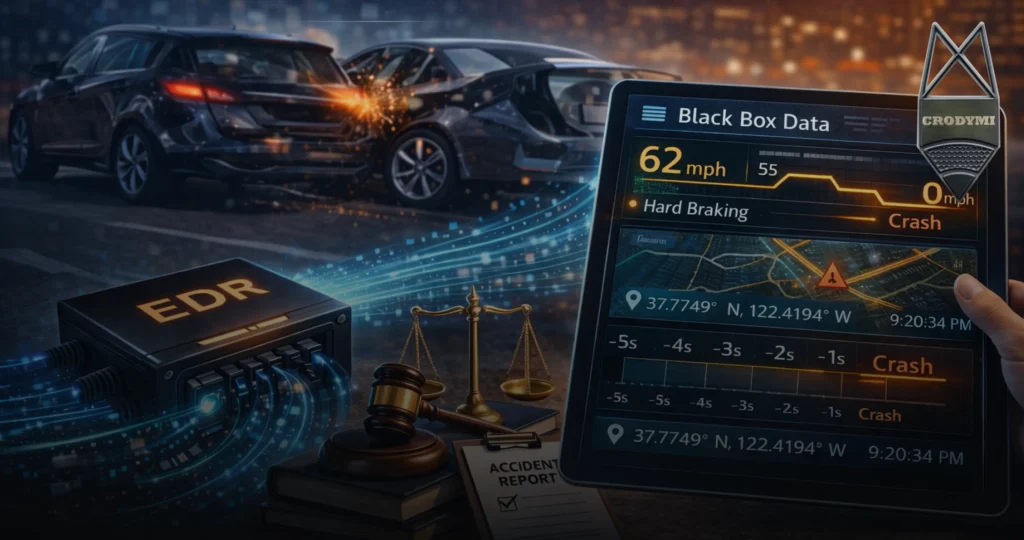
Vehicle litigation is different now. Crash cases are no longer based only on eyewitness accounts, police reports, or conflicting stories. Today, some of the strongest evidence comes from inside the vehicle itself. This evidence is collected by the event data recorder, often called the vehicle black box.
For attorneys working on motor vehicle crash claims, objective data can turn uncertainty into clarity. Jurors want trustworthy facts. Insurers need solid proof. Courts expect evidence that is reliable, can be verified, and is handled professionally. This is where black box data is especially useful.
An EDR vehicle captures what actually happened in the moments leading up to a collision. Speed, braking, throttle position, and restraint use are recorded without bias or emotion. When used correctly, this information cuts through conflicting testimony and creates a defensible narrative supported by science.
This guide covers how black box evidence works, what it records, why timing is important for preserving data, and how attorneys can use black box data analysis to improve their cases for both plaintiffs and defendants. It also shows how forensic partners like Crodymi LLC help attorneys nationwide with reliable, court-ready vehicle data.
What Is a Vehicle Event Data Recorder and What Does It Capture?
An event data recorder is a device found in many modern vehicles that records technical details about a crash or near-crash. Although it is often called a vehicle black box, it works differently from those used in airplanes. It does not save hours of driving history. Instead, it records a short period of important data when certain conditions are met.
An EDR usually records data when airbags deploy or when there is a sudden stop. Some systems also record when there is hard braking or loss of control, even if the airbags do not deploy. The purpose is not to monitor drivers, but to help reconstruct crashes.
Common Data Points Stored by an Event Data Recorder
Although the exact data fields vary by manufacturer and model year, most event data recorder data includes:
- Vehicle speed just before impact
- Brake application timing and pressure
- Throttle position and engine RPM
- Steering input in some vehicles
- Seat belt usage status
- Airbag deployment timing
- Delta-V or change in velocity
- Ignition cycle count
This data is time-stamped and measured in fractions of a second. Such precision gives attorneys details that eyewitnesses cannot provide. It offers a clear picture of driver actions and vehicle response just before the crash.
EDR vs Black Box vs Other Vehicle Systems
People often use the terms EDR, black box, and onboard vehicle systems as if they mean the same thing, which can cause confusion in court. An EDR is a special device made to record crash data. Infotainment systems, GPS logs, and telematics platforms store other types of information and have different rules for access.
When attorneys focus on EDR vehicle data, they are working with standard crash measurements that courts accept and experts can verify. This difference is important when the evidence is challenged in court.
Why This Data Is So Persuasive in Litigation
Black box evidence takes away guesswork. It answers questions that might otherwise be debated in court. Did the driver brake? Was the car speeding? Was the seat belt used? The event data recorder does not guess; it records the facts.
This objectivity makes it easier for juries to trust the evidence and helps attorneys build stronger arguments. With expert analysis, black box data becomes a key part of modern accident reconstruction.
How Long Does Black Box and EDR Data Last After a Crash?
A common and urgent question attorneys ask is: How long does a car’s black box keep data? The answer is not always simple, but it is very important.
Understanding Data Retention in EDR Systems
Most EDR systems can only store data from a few crash events. Some keep just the most recent event, while others save two or three. When the memory is full, new events replace the old ones.
Because of this risk of overwriting, timing is crucial. Driving the car, more crashes, or even some diagnostic checks can erase important data. That is why attorneys need to act fast when a vehicle with an EDR is involved.
Another common question is, “How long does EDR data last if the car is not used?” In most cases, the data stays safe until it is overwritten or erased on purpose. There is no set time limit, but it is risky to assume the data will always be there.
Why Delay Can Destroy Evidence
Vehicle owners might erase data without knowing it by driving the car after a crash. Tow yards may turn vehicles on and off. Repair shops might disconnect batteries or run tests. Each of these actions raises the risk of losing data.
Knowing how long a car’s black box keeps data depends more on what happens to the car than on the number of days. Any time the car is started after a crash can affect the data. That is why it is important to use litigation holds and send preservation letters early in a case.
Best Practices for Preserving EDR Vehicle Data
Attorneys should take proactive steps immediately after identifying a potentially valuable black box source:
- Send preservation letters to vehicle owners and insurers
- Request that vehicles remain powered off
- Prevent repairs or inspections until data retrieval
- Document the chain of custody from the start
- Engage qualified forensic professionals early
Preserving event data recorder evidence is essential. Once the data is overwritten, it cannot be recovered.
Why Early Action Strengthens Legal Strategy
Knowing how long EDR data lasts gives attorneys an advantage. It lets them protect the evidence instead of reacting after it is lost. It also stops the other side from getting or shaping the data first.
In high-value cases, timing can decide which side presents the most believable story.
Using Black Box Data Analysis to Build a Stronger Vehicle Case
Raw numbers by themselves do not win cases. What matters is how the data is interpreted, the context, and whether it is believable. This is why black box data analysis is so important. When experts handle the data, it becomes a clear story that explains driver actions, vehicle response, and crash details in a way judges and juries can follow.
What Black Box Data Analysis Really Involves
At its core, black box data analysis is the process of extracting, decoding, validating, and interpreting information stored inside an EDR vehicle. This process follows strict technical and forensic protocols to ensure the data remains accurate and admissible.
Analysis is not done alone. Experts compare EDR vehicle data with evidence from the scene, vehicle damage, road markings, and police reports. This thorough approach helps attorneys check their assumptions and find any inconsistencies.
In many cases, the data support what witnesses said. In other cases, it shows details no one noticed, like late braking, sudden acceleration, or no attempt to avoid the crash.
How EDR Evidence Strengthens Plaintiff and Defense Strategies
For plaintiff attorneys, black box data analysis often helps establish negligence. Speed above posted limits, delayed braking, or throttle engagement before impact can support claims of reckless or inattentive driving.
For defense attorneys, the same data can disprove exaggerated allegations. EDR records may show reasonable speed, early braking, or seat belt usage that contradicts injury claims.
This flexibility makes EDR evidence useful for both sides in a case. Objective data does not take sides; it supports accuracy.
Real World Questions EDR Data Can Answer
Properly interpreted event data recorder information helps resolve critical questions such as:
- Did the driver apply the brakes before the impact
- Was acceleration present at the moment of collision
- How severe was the change in velocity
- Was the seat belt engaged
- Did one impact occur or multiple sequential impacts
These answers replace guesswork with real, measurable facts. This kind of clarity connects with juries, who want evidence based on reality.
Why Expertise Matters More Than Ever
Courts scrutinize technical evidence. Opposing counsel challenges the methodology. Judges expect credentials and transparency. That is why attorneys rely on EDR / black box data retrieval and analysis services performed by experienced professionals who understand both engineering and legal standards.
Working with qualified event data recorder (EDR) data retrieval experts makes sure the data is collected according to manufacturer rules and interpreted using accepted methods. Mistakes at this stage can hurt the whole case.
Practical Steps for Preserving, Retrieving, and Presenting Black Box Evidence in Court
Good results depend on careful work. Attorneys who do not take EDR evidence seriously may lose its value. Those who follow a clear process have a better chance of success.
Step One: Identify an EDR-equipped vehicle early
Not all vehicles have an event data recorder, but many passenger cars and commercial vehicles do. Finding out early lets attorneys act before the data is lost.
Knowing how long a car’s black box keeps data helps set the right level of urgency. The sooner the data is checked, the better the results.
Step Two: Preserve the Vehicle and the Data
Preservation starts with a written notice. Litigation hold letters should clearly state that the vehicle and all onboard data must remain untouched. This includes the black box, battery connections, and electronic systems.
Vehicle storage conditions matter. Secure facilities that prevent unauthorized access reduce the risk of spoliation. Some forensic teams utilize controlled environments similar to a black box data center concept, where sensitive digital evidence is handled with documented security protocols.
Step Three: Engage Qualified EDR Professionals
Retrieval requires specialized hardware, software, and training. Attorneys should work with black box data analysis specialists who follow accepted forensic procedures.
At this stage, hiring professionals from trusted providers is crucial. Many legal teams use EDR / black box data retrieval and analysis services to make sure the data is accurate, well-documented, and can stand up in court.
Step Four: Authenticate and Correlate the Evidence
Courts expect more than charts. Experts must explain how the data was obtained, verify that it belongs to the subject vehicle, and correlate findings with physical evidence.
Matching the data with vehicle damage and scene evidence makes it more likely to be accepted in court and trusted. When EDR data fits with other evidence, it is hard to argue against.
Step Five: Present the Data Clearly to the Court
Complicated numbers do not help if they are not explained well. Good experts turn technical findings into simple visuals and clear language.
Attorneys who use EDR findings along with diagrams, timelines, and expert explanations help juries see what happened and why it is important.
For broader litigation support beyond EDR, many firms also rely on a full range of forensic and litigation support services to address scene analysis, vehicle inspections, and data integration across cases.
Why Black Box Evidence Carries Weight in the Courtroom
Judges and juries trust evidence that is unbiased. Unlike witness testimony, which can be affected by stress or memory problems, EDR data records events as they actually happen.
Knowing how long EDR data lasts is also important for courtroom strategy. Attorneys who preserve data quickly show they are careful and professional, which builds credibility.
Courts are paying more attention to this kind of evidence. When handled correctly, it acts as a neutral witness that does not exaggerate or downplay what happened.
For attorneys seeking deeper insight into courtroom application, this resource on how black box evidence can make or break a case provides additional perspective on judicial treatment and trial strategy.
Conclusion
Vehicle litigation is no longer based on guesswork. Objective digital evidence is now key to settling disputes and finding the truth. The event data recorder is one of the most powerful tools attorneys have for crash cases.
Understanding what data exists, how long a car’s black box stores data, and how to preserve it correctly can determine whether critical evidence survives or disappears. When interpreted through professional black box data analysis, EDR evidence clarifies liability, supports expert testimony, and strengthens courtroom narratives.
Legal teams that act early and partner with qualified forensic professionals position themselves for stronger outcomes. Those seeking trusted support can explore how Crodymi’s vehicle forensics and data services assist attorneys nationwide with reliable, court-ready insights delivered with precision and care.
Frequently Asked Questions
What is the difference between an event data recorder and a black box in a car?
An event data recorder is the technical device that stores crash data, while the term black box is a common nickname used to describe it.
How long does a car’s black box store data after a crash?
The answer to how long a car’s black box stores data depends on vehicle activity, since new events or ignition cycles can overwrite stored information.
How long does EDR data last if the vehicle is not driven?
Understanding how long EDR data lasts depends on whether additional qualifying events occur, as stored records typically remain until overwritten.
Can attorneys access EDR vehicle data without an expert?
Accessing EDR vehicle data requires specialized tools and training, making professional involvement strongly recommended.
Is black box data admissible in United States courts?
Yes, courts regularly admit black box data when it is properly preserved, authenticated, and presented by qualified experts.
What if the opposing party controls the vehicle?
Early preservation letters and court orders help protect EDR evidence when another party controls the vehicle.
How does black box data analysis help when there are no witnesses?
In witness-free cases, event data recorder data often becomes the most reliable source of objective evidence.