
Expert Accident Reconstruction Report Service
Get started
Start the process today — no upfront payment required. We’ll provide the service now, and you can settle the payment later.
Tell us what you need
Get updates & continue
Drop your email so we can follow up. You can skip if you prefer.
What Is an Expert Accident Reconstruction Report Service?
An expert accident reconstruction report service involves either creating a detailed simulation of a crash or critically reviewing an existing report’s methodology and findings. Accident reconstruction uses established scientific methods—drawing on physics, engineering, and data analytics—to “replay” the collision and reveal the full sequence of events. Every report focuses on three critical factors—Environment, Vehicle, and People (E.V.P.)—and answers five key questions: what really happened, how it occurred, when each event took place, why it happened, and to whom the consequences fell. This comprehensive, evidence-based approach ensures that no detail is overlooked and that the underlying causes of the crash are thoroughly understood.
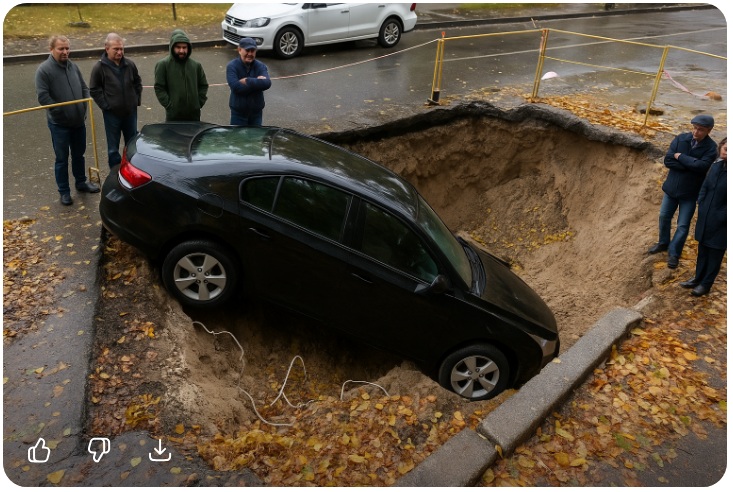
Examining road surface, lighting, weather, and signage to understand how external factors influenced the crash.
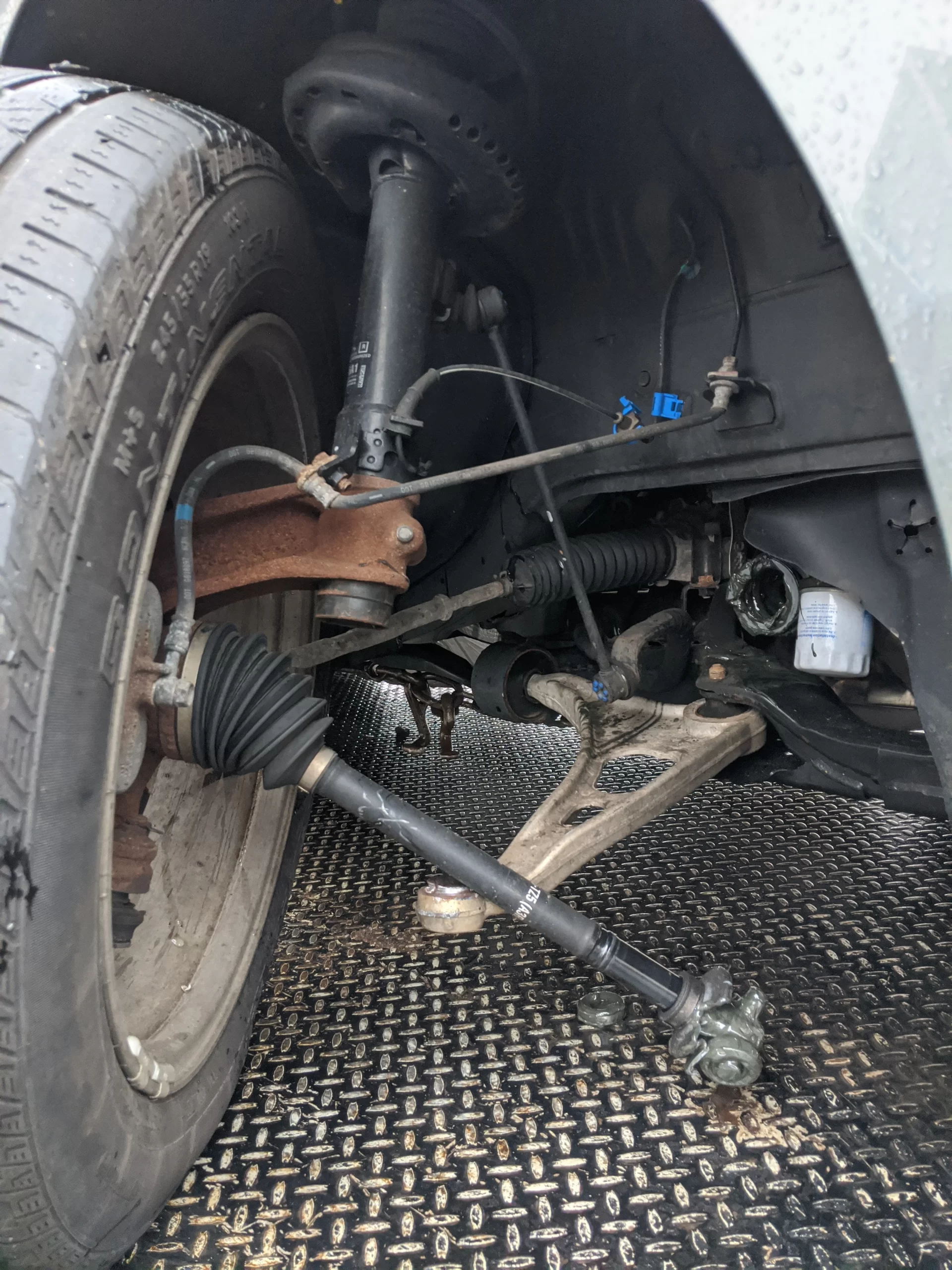
Analyzing speed, braking, steering, and structural integrity to reconstruct the sequence of events and determine impact severity.
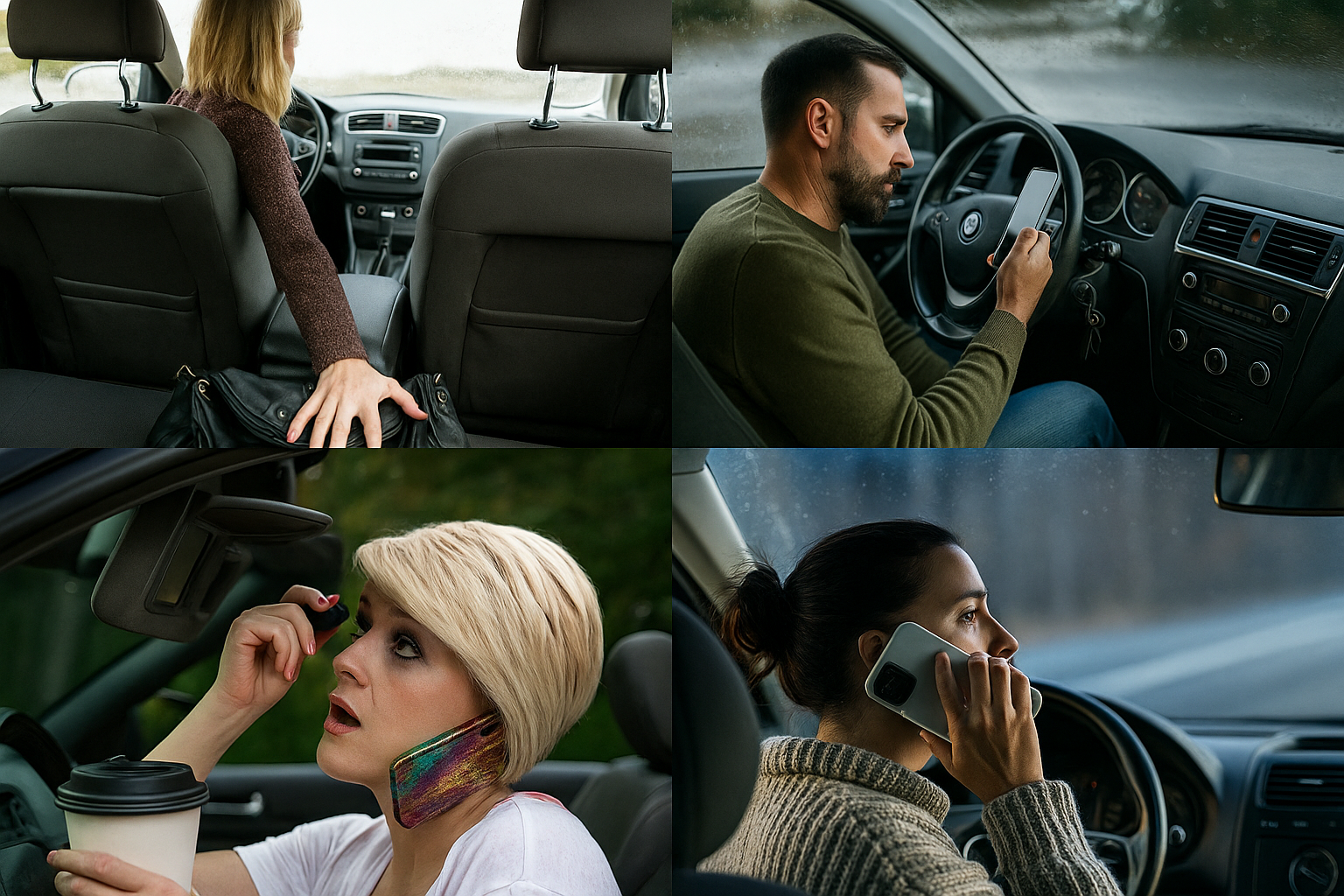
Reviewing driver behavior, reaction time, and possible distractions to reveal human factors in the collision.
Accident reconstruction reports are forensic blueprints that combine physics, engineering, and data analytics to answer one question: What really happened? These reports provide invaluable insight, but their true value depends on expert interpretation. Without a thorough review by a qualified specialist, critical details can be misunderstood or overlooked.
An expert review delves into every aspect of the crash, including:
- Environment: Examining road conditions, weather, lighting, and other external factors for context.
- Vehicle: Analyzing speed, braking patterns, and structural integrity to reconstruct the sequence of events and determine impact severity.
- People: Reviewing driver behavior, reaction time, and alertness to reveal how human actions contributed to—or could have prevented—the crash.
Additionally, a full report review includes the analysis of:
- EDR (black box) data: Data on speed, braking, and seatbelt usage that illuminate vehicle performance at the moment of impact.
- Skid mark analysis: Calculations of pre-crash speed and driver reactions for clarity on the moments leading up to the collision.
- Vehicle damage patterns: Impact angles and deformation clues that confirm what took place during the crash.
- Road design flaws: Identifying poor signage, inadequate lighting, or malfunctioning signals that may have contributed to the accident.
When you choose our expert accident reconstruction report review, you ensure no detail is overlooked. Every factor—environment, vehicle, and people—is examined with precision so you truly understand what happened. Don’t leave your case to chance; let our experts provide the comprehensive, accurate analysis you need.
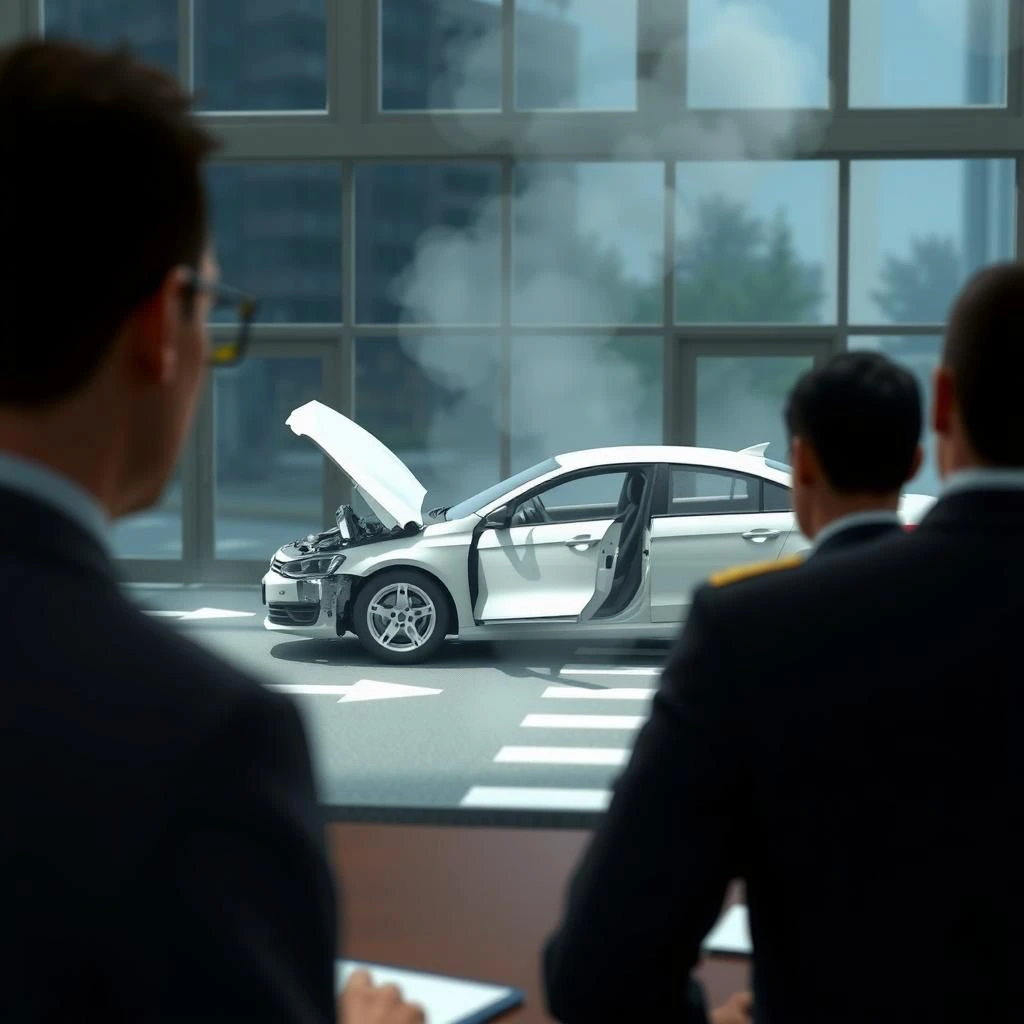
This isn’t fiction. In 2024, a California court convicted a driver of vehicular homicide after her SUV’s Event Data Recorder (EDR) revealed she was traveling 81 mph in a 45 mph zone moments before killing two pedestrians. The key to unlocking this case? A meticulous accident reconstruction report review. Behind that report was an experienced accident reconstruction expert whose analysis helped turn raw data into courtroom clarity.
Get started
Start the process today — no upfront payment required. We’ll provide the service now, and you can settle the payment later.
Tell us what you need
Get updates & continue
Drop your email so we can follow up. You can skip if you prefer.
Why Your Case Needs This Review (and What Happens Without It)
- Insurance companies aren’t on your side. They’ll minimize payouts by disputing fault. A report review identifies
gaps in their arguments. - Not all experts are equal. Many reports lack depth—like omitting EDR data or misinterpreting skid marks. A review
ensures nothing slips through. - Juries need simplicity. Technical jargon confuses. A reviewer translates data into clear visuals (animations,
diagrams) that resonate in court.
How It Works: The 4-Step Process:
- Step 1: Evidence Audit
- Gather police reports, witness statements, EDR data, and photos.
- Example: The Tesla’s EDR showed hands-off-the-wheel alerts ignored by the system.
- Step 2: Technical Deep Dive
- Recalculate speeds, forces, and collision dynamics.
- Example: The reviewer used NHTSA crash test comparisons to prove the swerve exceeded normal human
reaction times.
- Step 3: Identify Flaws
- Scrutinize the original report for errors or omissions.
- Example: The first report overlooked the faded lane marker’s role.
- Step 4: Build a Persuasive Narrative
- Translate findings into visuals and plain-language summaries.
- Result: The jury awarded the victim $2.3 million.
When to Demand a Review (Don’t Miss These Red Flags)
- Conflicting accounts: “He ran the red light!” vs. “It was yellow!”
- Severe injuries or fatalities: High stakes demand precision.
- Commercial vehicles: Trucks and fleets have complex data systems.
- Suspected defects: Was it the driver, or a faulty brake line?
Pro Tip: If your attorney hesitates to request a review, ask why. The cost ($3,000–$15,000) often pays for itself in
higher settlements.
Why Crodymi.com Is My Go-To for Report Reviews:
I’ve seen countless firms offer accident analysis, but Crodymi stands out. Here’s why:
- EDR mastery: They extract data even from water-damaged or burnt black boxes.
- Forensic animations: Turn crash data into jury-friendly visuals.
- Transparency: No hidden fees. Period.
When every detail counts, a fresh set of expert eyes can make all the difference. Connect with Crodymi’s specialists
for a complimentary consultation that delves deep into your accident report, uncovering critical insights you might
otherwise miss. With a focus on clarity and precision, their analysis transforms complex data into a compelling
narrative for your case.
The Bottom Line
References
- National Highway Traffic Safety Administration (NHTSA). (2023). Crash Investigation Sampling System.
https://crashstats.nhtsa.dot.gov/Api/Public/ViewPublication/813667 - Crodymi Consulting LLC. (2025). Vehicle Data Extraction Services. https://crodymi.com
Get started
Start the process today — no upfront payment required. We’ll provide the service now, and you can settle the payment later.
Tell us what you need
Get updates & continue
Drop your email so we can follow up. You can skip if you prefer.
Navigating the Aftermath
Essential Steps After a Car Accident
Introduction

Ensure Safety:
The first and foremost concern after a car accident is the safety of all involved parties. Move to a safe location away from traffic if possible. Turn on hazard lights and set up warning triangles or flares to alert other drivers. This step helps prevent further accidents and ensures the well-being of everyone at the scene.

Check for Injuries:
Immediately assess yourself and others for injuries. Call emergency services if medical attention is required. Even seemingly minor injuries should not be ignored, as they may develop into more serious issues later. Remember, prioritizing health and well-being is paramount.

Exchange Information:
Exchange crucial information with the other parties involved in the accident. This includes names, addresses, phone numbers, insurance information, and vehicle details. Additionally, collect contact information from any witnesses present at the scene. This information is vital for insurance claims and legal procedures.

Document the Scene:
Take photographs of the accident scene from various angles, capturing vehicle damage, road conditions, and any relevant signage or signals. These images serve as valuable evidence during insurance claims and investigations. Note the date, time, and weather conditions as well.

File a Police Report:
Contact law enforcement to report the accident, especially if there are injuries, significant property damage, or disputes between parties. Obtain a copy of the police report, as it is a crucial document for insurance claims and legal proceedings.

Notify Your Insurance Company:
Promptly inform your insurance company about the accident, providing all the necessary details. Cooperate fully with the claims process, submitting the required documentation and answering any inquiries promptly. Timely communication ensures a smoother claims experience.

Seek Medical Attention:
Even if injuries seem minor initially, it is advisable to seek medical attention. Some injuries may not manifest immediately, and a medical professional can identify and address potential issues. Additionally, medical records play a crucial role in insurance claims and legal proceedings.

Preserve Evidence:
Keep all documents related to the accident organized, including medical records, repair estimates, and correspondence with insurance companies. This documentation proves invaluable in establishing the extent of damages and supporting your case if legal action becomes necessary.

Follow Up on Repairs:
Coordinate with auto repair shops to assess and repair vehicle damage. Obtain multiple repair estimates, and be cautious of any potential scams or fraud. Keep records of all transactions and communications related to the repair process.

Be Mindful of Legal Implications:
Consult with legal professionals if there are disputes, injuries, or liability issues. Understanding your rights and responsibilities is crucial, and legal guidance can help navigate complex situations, ensuring a fair resolution.
Conclusion:
Experiencing a car accident is undoubtedly stressful, but knowing the essential steps to take in its aftermath can make the process more manageable. From ensuring immediate safety to navigating insurance claims and potential legal proceedings, being proactive and thorough in your approach is key. By following these steps, individuals can better cope with the aftermath of a car accident and work towards a resolution that prioritizes their well-being and safeguards their interests.
For more info, please get in touch with Crodymi.
Author: Ricardo Mitchell
M.S., B.S.
Date: Nov 18, 2023
Frequently Asked Questions
An accident reconstruction report—also called crash reconstruction or collision analysis—is a forensic document that combines physics, engineering, and data analytics to recreate the sequence of events in a collision.
We collect evidence—EDR (“black box”) downloads, skid marks, vehicle damage patterns, and scene photos—then apply physics and engineering models to simulate speeds, angles, and impact forces.
Our E.V.P. framework examines three core areas: Environment, Vehicle, and People.
We assess road geometry, pavement condition, lighting, signage, weather, and traffic control devices to understand how external conditions influenced the crash.
Vehicle analysis covers speed, brake/throttle inputs, steering, structural integrity, tire marks, and onboard EDR data.
We study driver behavior, distraction, reaction time, seating position, and occupant kinematics to uncover human contributions to the collision.
- EDR / Black Box – speed, braking, steering inputs
- Skid Mark Analysis – pre-impact speed, reaction
- Vehicle Damage Patterns – impact severity, angles
- Scene Mapping – laser scanning, photogrammetry
- Environmental Data – weather, road geometry
An EDR—often called a vehicle “black box”—logs data on speed, throttle, braking, seatbelt usage, and steering inputs just before and during a crash.
We use certified tools (e.g., Bosch CDR kit) and strict chain-of-custody protocols to safely remove, download, and analyze the EDR module.
We employ laser scanners, drones, high-precision measuring tools, Bosch CDR, Vericom DAQ, and forensic photogrammetry software like iWitness™.
| Certification | Organization |
|---|---|
| Certified Accident Reconstructionist (CAR) | Association of Reconstruction Professionals |
| Certified EDR Analyst (CEDRA) | Bosch Engineering |
| Crash Investigation & Reconstruction | IPTM |
| Forensic Mapping & Photogrammetry | iWitness™ |
| Biomechanics & Human Factors | SAE International |
Standard turnaround is 2–3 weeks after evidence collection (vehicle exam, EDR download, site visit). Rush options (1 week) are available.
Fees start at $500 for EDR download and $300 for analysis. Complete reconstructions (including animations) begin at $1,200.
- Detailed narrative of events
- EDR data plots & interpretation
- Scene diagrams & photogrammetry images
- Vehicle damage analysis
- Conclusions & expert opinions
Yes—3D animations recreate the crash sequence based on precise data, ideal for courtroom presentations or client explanations.
We use laser scanning or drone imagery and photogrammetry software to create accurate 3D models of the crash site for precise measurements and visualizations.
Absolutely—our experts provide expert testimony and defend methodologies under Daubert/Frye standards.
Contact us via our online form or call +1 (940) 290-6052. We’ll arrange vehicle access and a site inspection.
Based in Oklahoma, we serve TX, AR, KS, and nationwide cases via local partner labs.
Avoid repairs or salvage. Park in a secure, dry location so we can access the EDR module and document damage.
Yes—if the airbag deploys and the ignition remains on, new crash events can overwrite the EDR memory. Timely download is critical.
Each module and data file is tagged, logged, and stored in a secure vault, following ISO/IEC 17025 standards.
`Yes—we collaborate directly with adjusters to explain findings and support claims resolution.
We use Bosch CDR, Vericom VC4000, FARO Scene, iWitness™, PC-Crash, and proprietary tools.
Reach out via our contact page or call us. We’ll guide you through evidence collection, EDR download, and next steps.
Get started
Start the process today — no upfront payment required. We’ll provide the service now, and you can settle the payment later.
Tell us what you need
Get updates & continue
Drop your email so we can follow up. You can skip if you prefer.